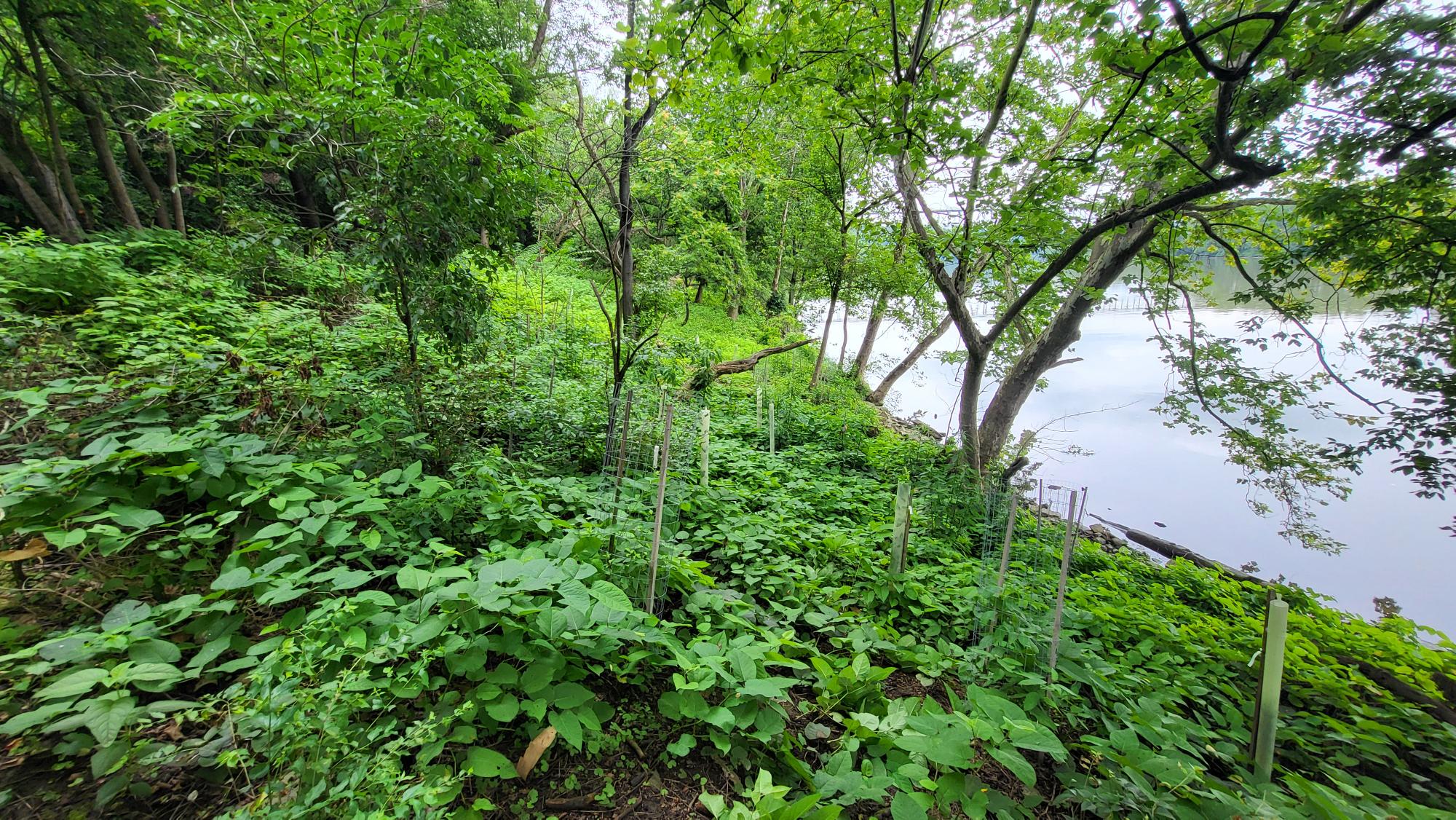
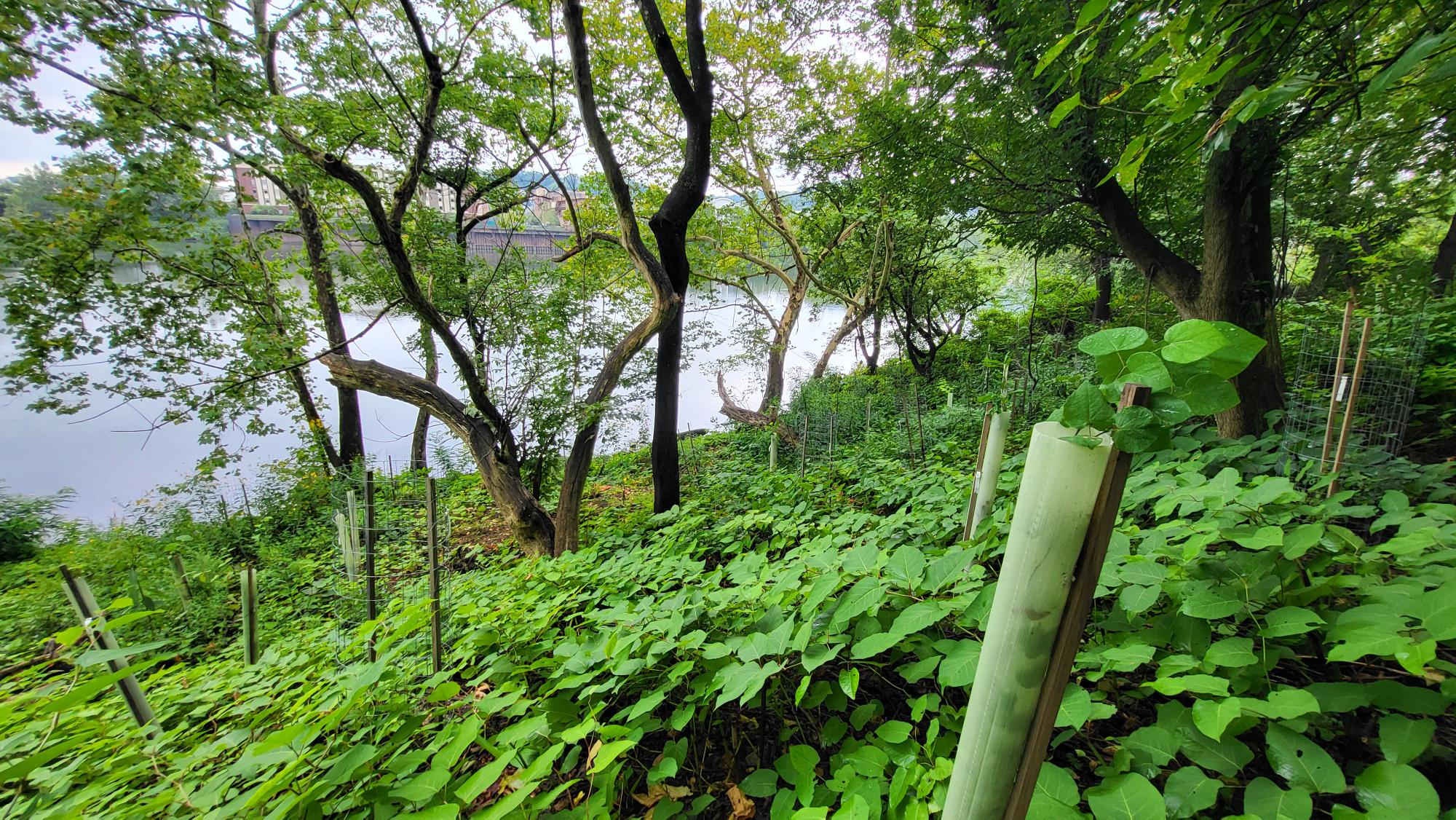
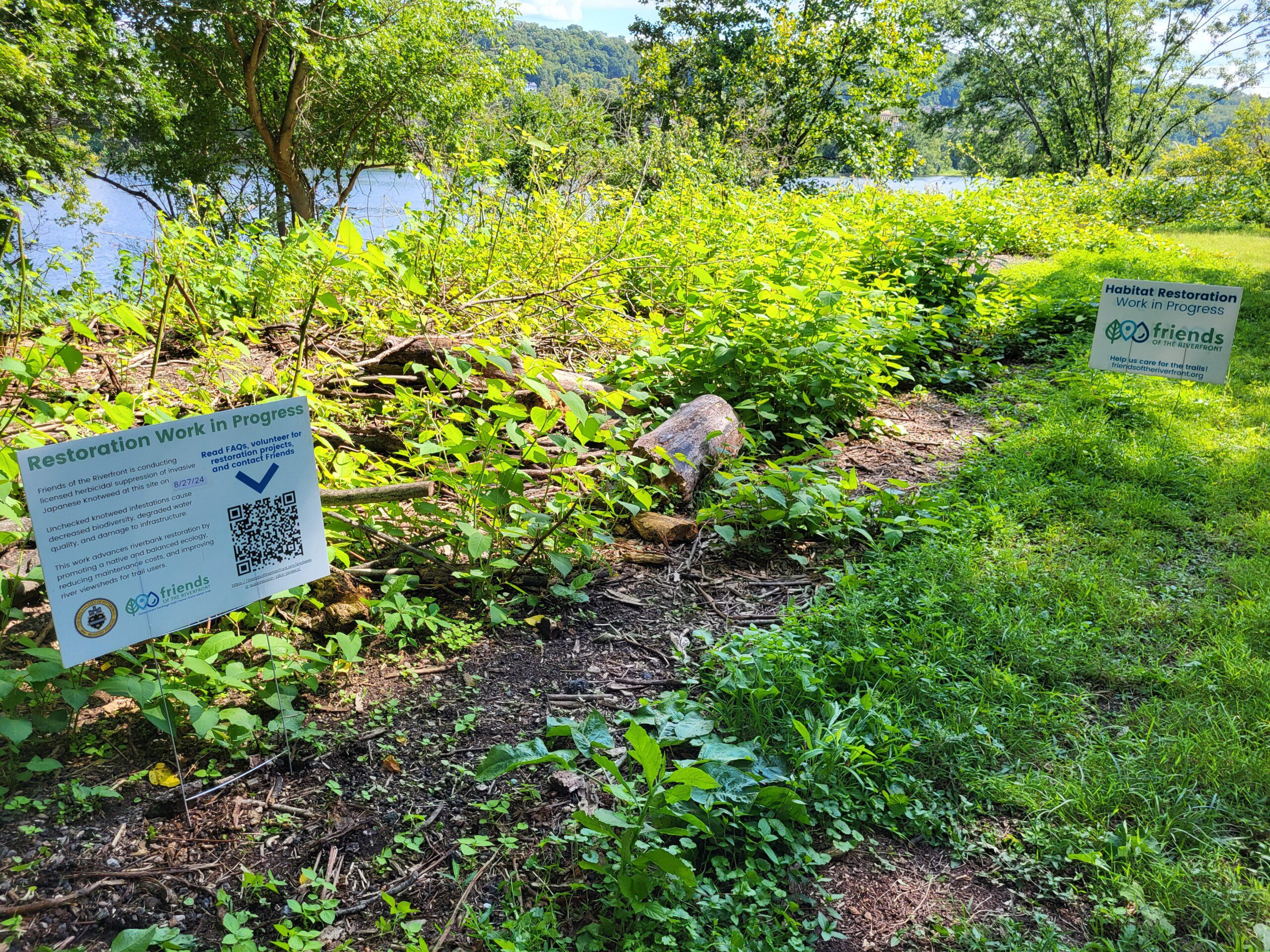
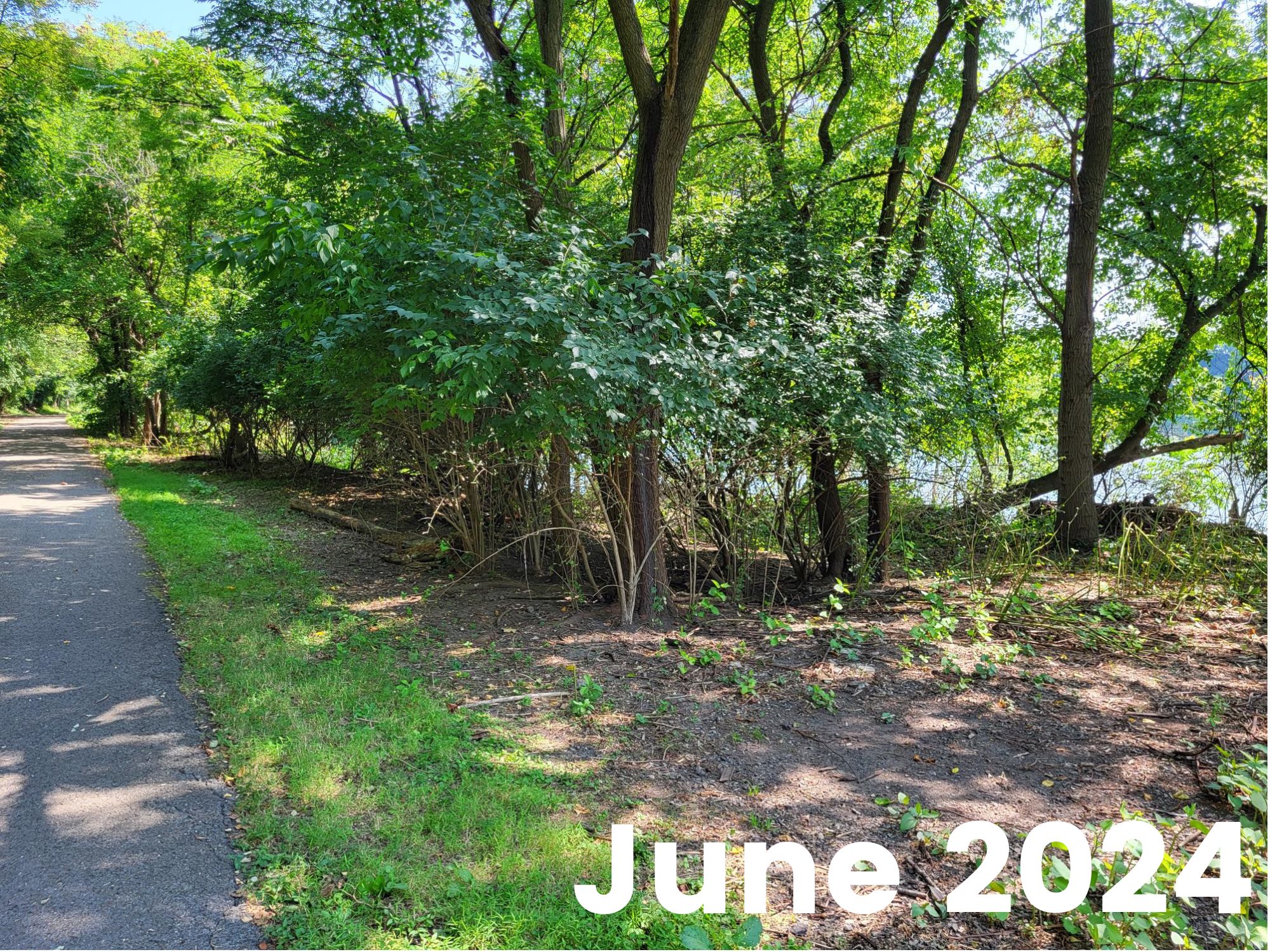
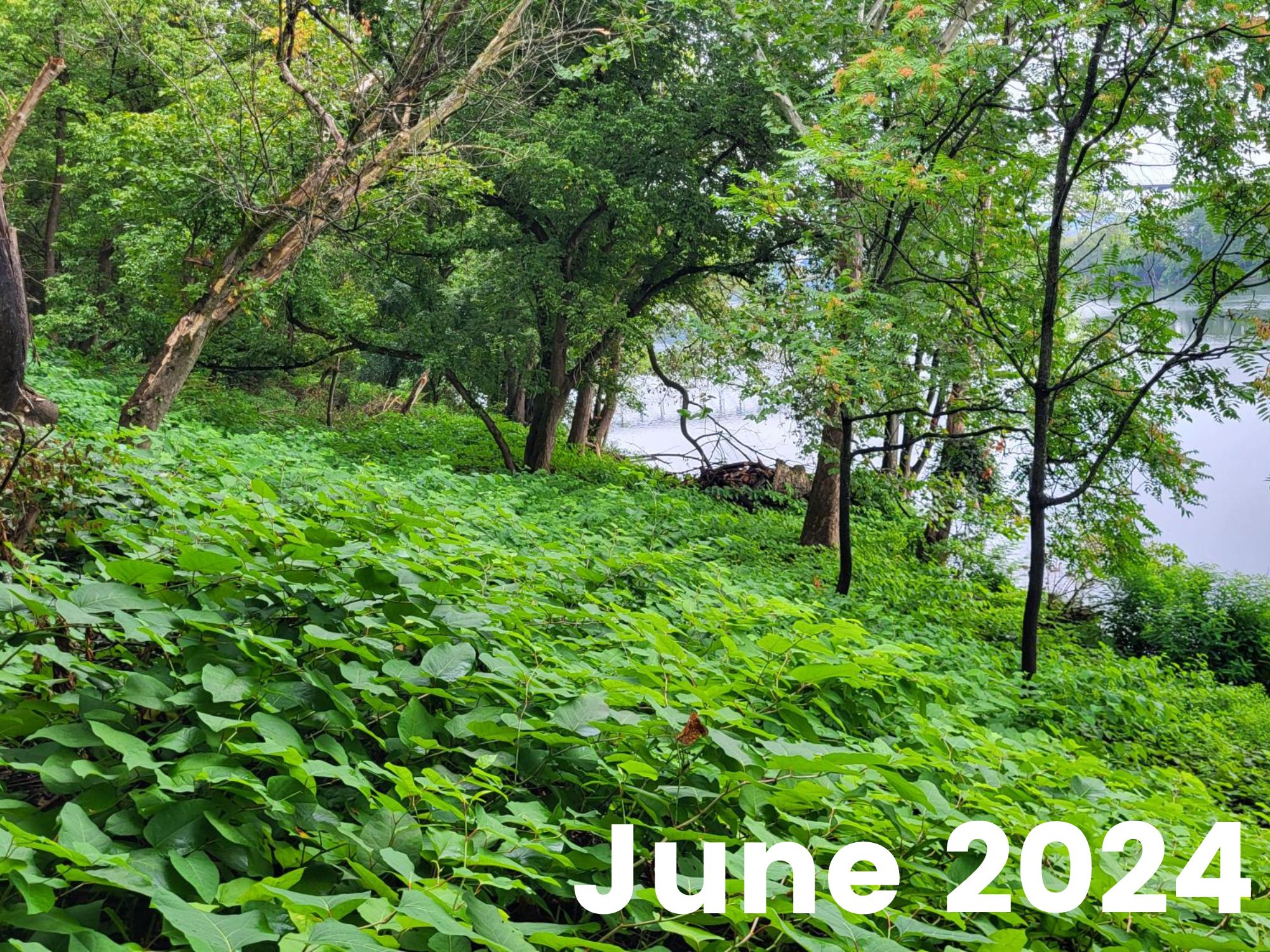
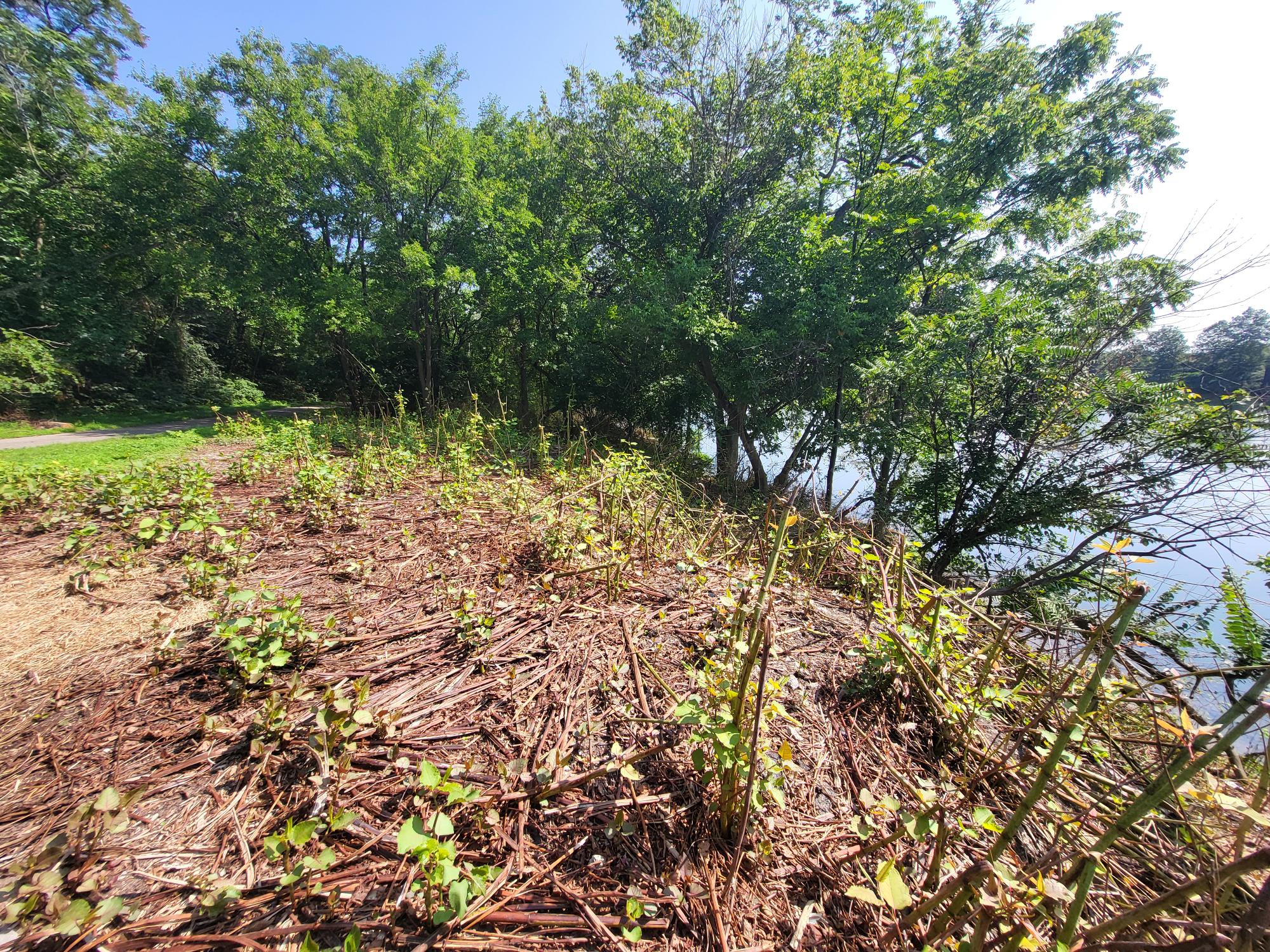
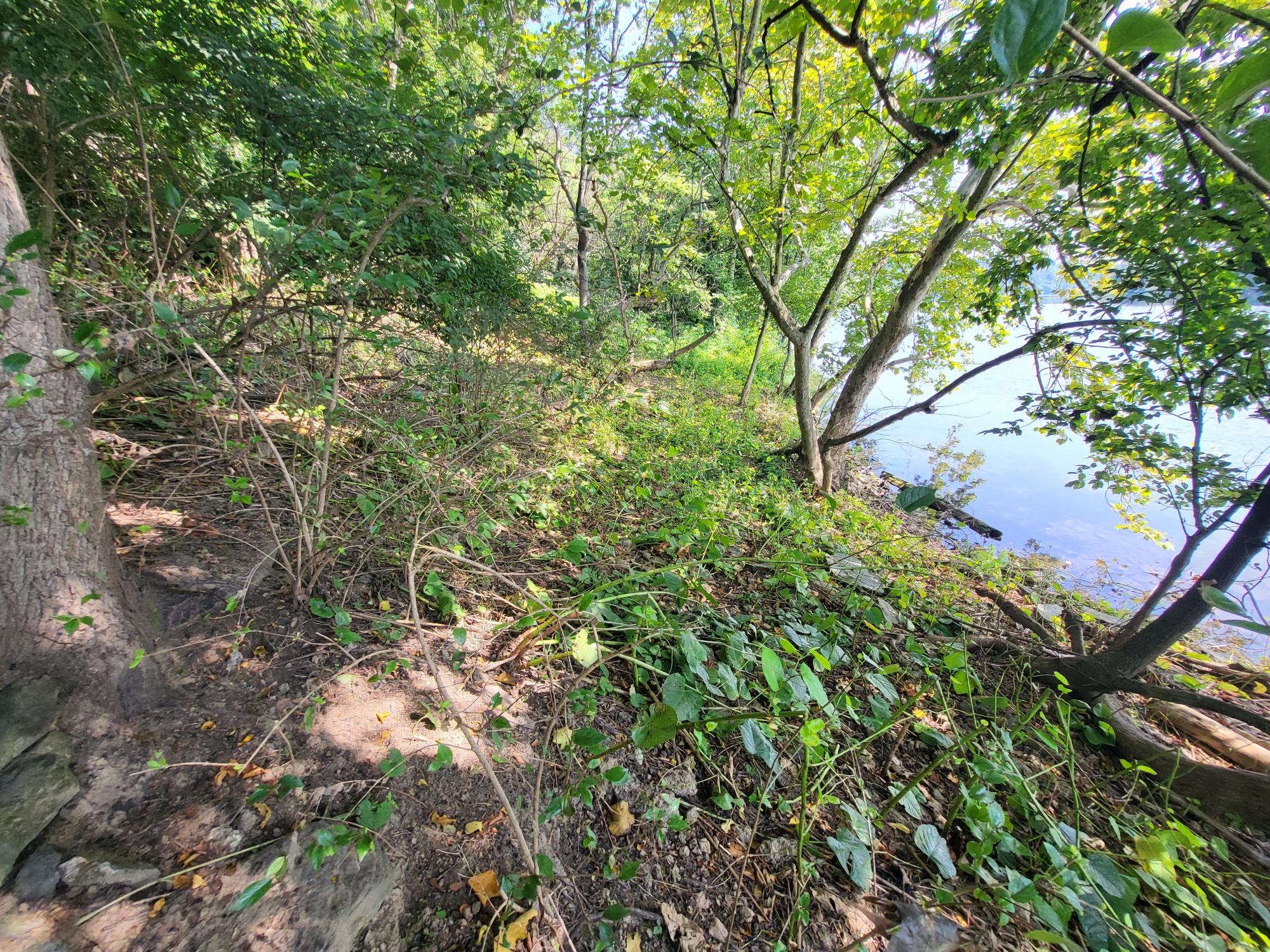
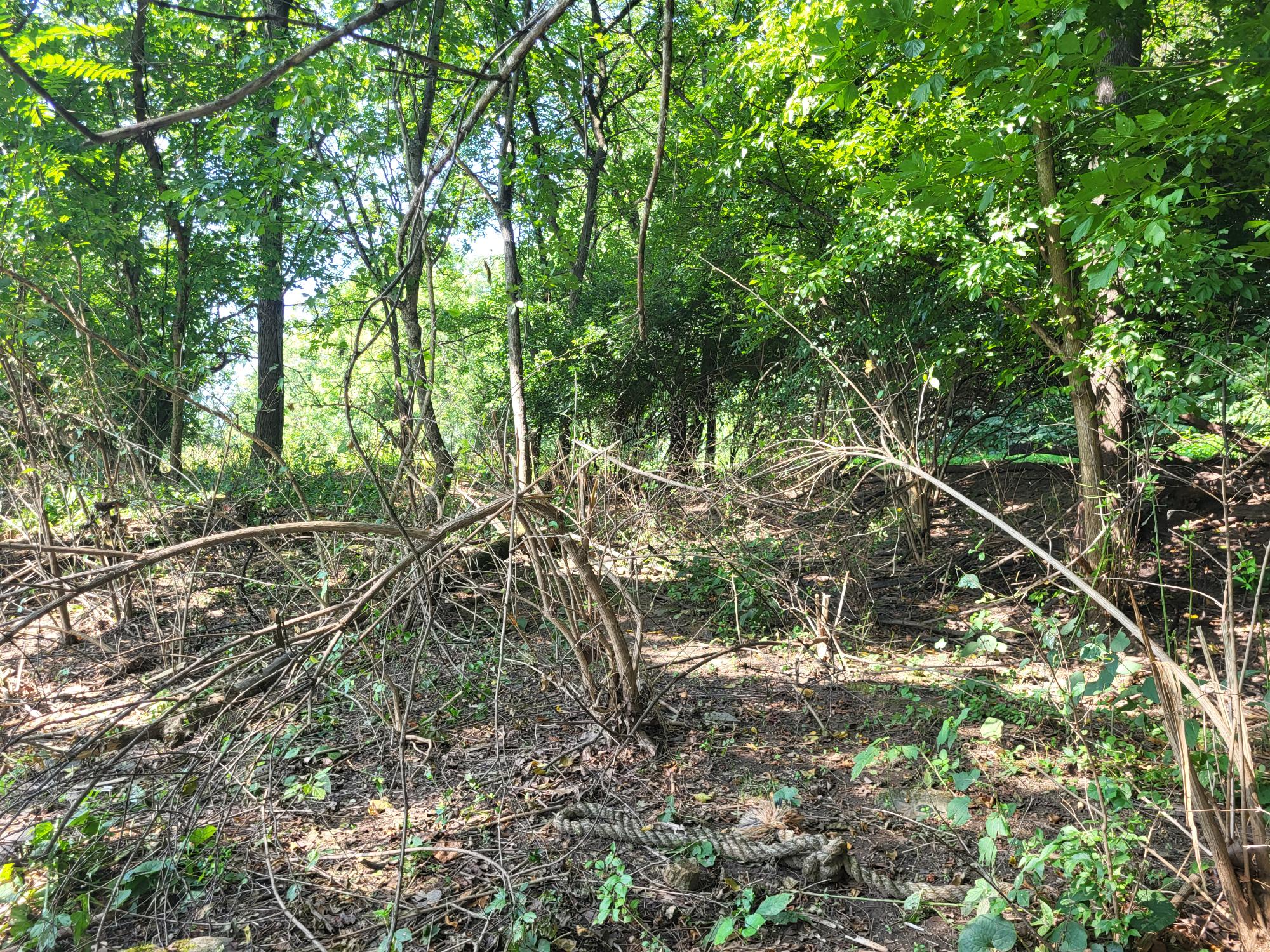
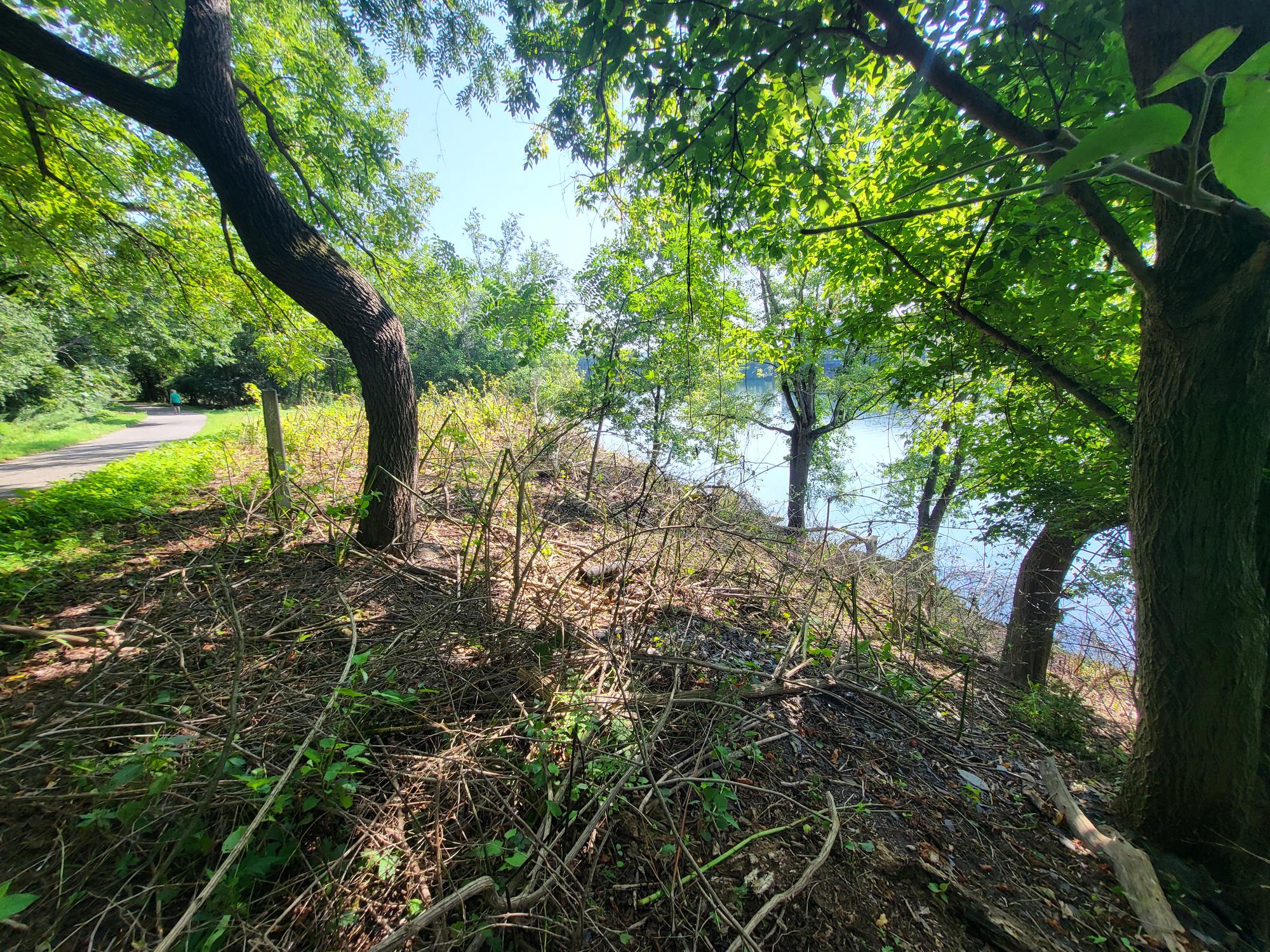
The existing Duck Hollow segment of the Heritage Trail is approximately 1.45 miles long along the Monongahela River with gently sloping riverbanks that have largely been overtaken by non-native, invasive vegetation. Present across the segment are Japanese knotweed, bush honeysuckle, porcelain berry, and tree-of-heaven. Not only are these monocultures a nuisance to trail users due to overgrowth and diminished river viewsheds, unchecked knotweed infestations, in particular, result in decreased biodiversity in both plant and animal communities, degraded water quality, and damage to human infrastructure like trail surfaces and drainage head walls.
Friends is leading a coordinated approach to reclaim approximately 4 acres of riverbank to:
• Reduce non-native invasive monocultures,
• Advance a native and balanced biodiversity of plants and wildlife,
• Restore native understory and tree canopy advancing the City of Pittsburgh’s Urban Forest Master Plan,
• Reduce damage to infrastructure and maintenance costs for the City of Pittsburgh,
• Improve viewsheds of the Monongahela River for trail users,
• Promote environmental stewardship, engagement, and advocacy.
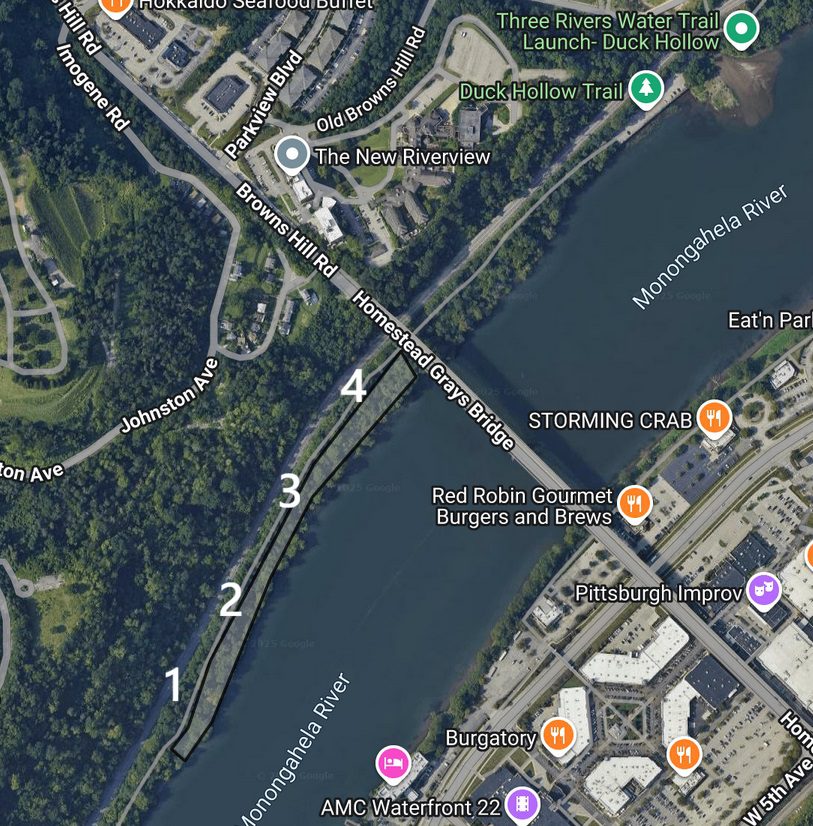
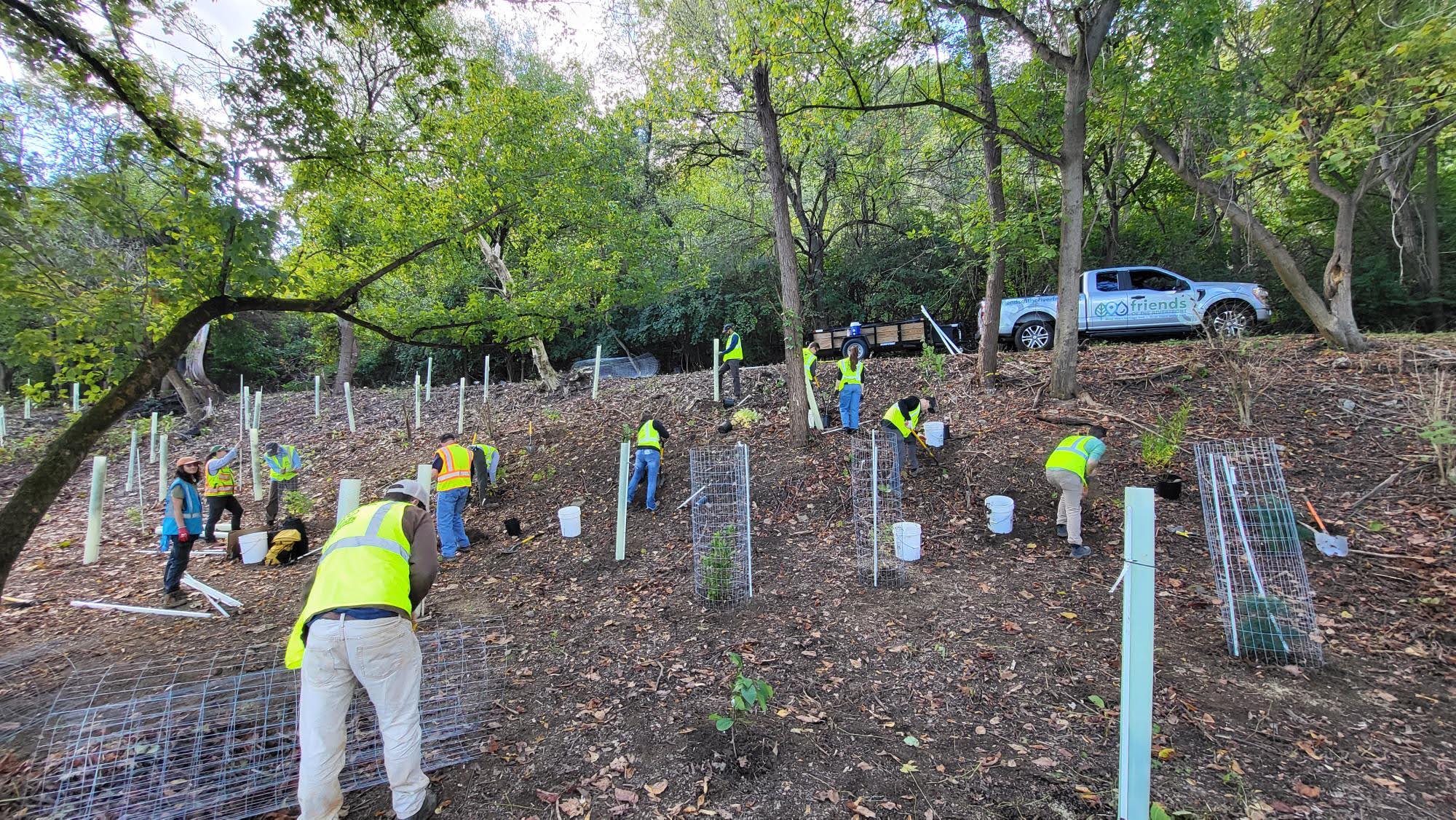
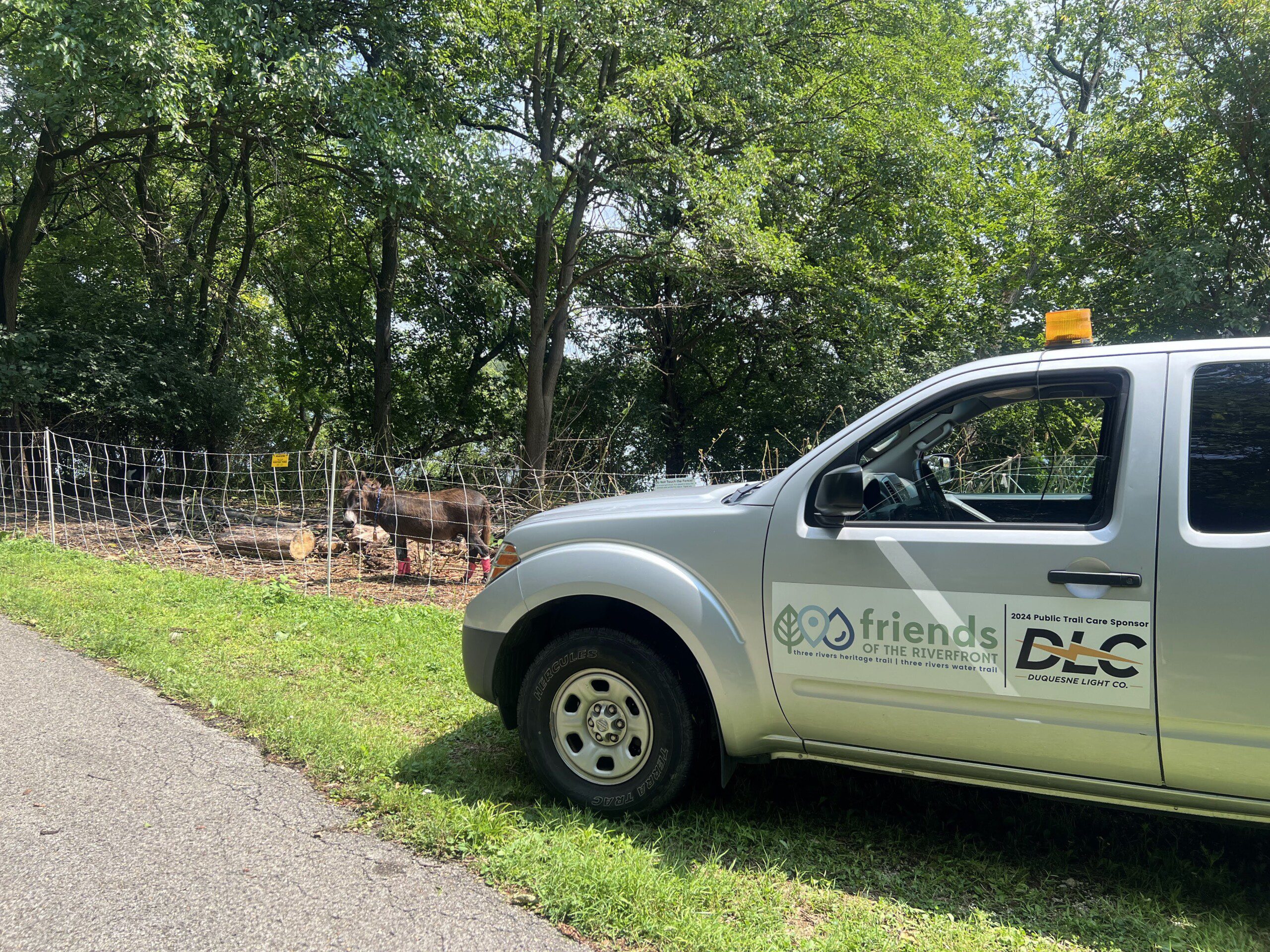
The 4 acre project (approx. 2,926 ft from the trailhead), broken into project sites 1, 2, 3, and 4, includes non-native invasive vegetation suppression, tree pruning and undesirable vegetation removal, and restoration of tree canopy and native understory through plantings. Friends coordinates partner non-profits Allegheny Goatscape and Landforce annually to mechanically clear and remove invasive vegetation to reduce it’s presence and allow for improved site access. Later in the season Fruittown Land Stewardship Services, a permitted, state licensed applicator performs targeted herbicidal suppression of Japanese knotweed. Utilizing this process year over year, Friends anticipates project completion in 2027, with over 500 native trees and shrubs planted and seeded.
Investment
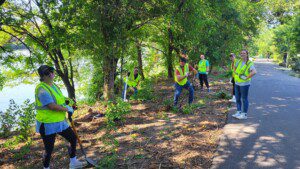
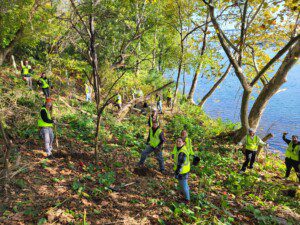
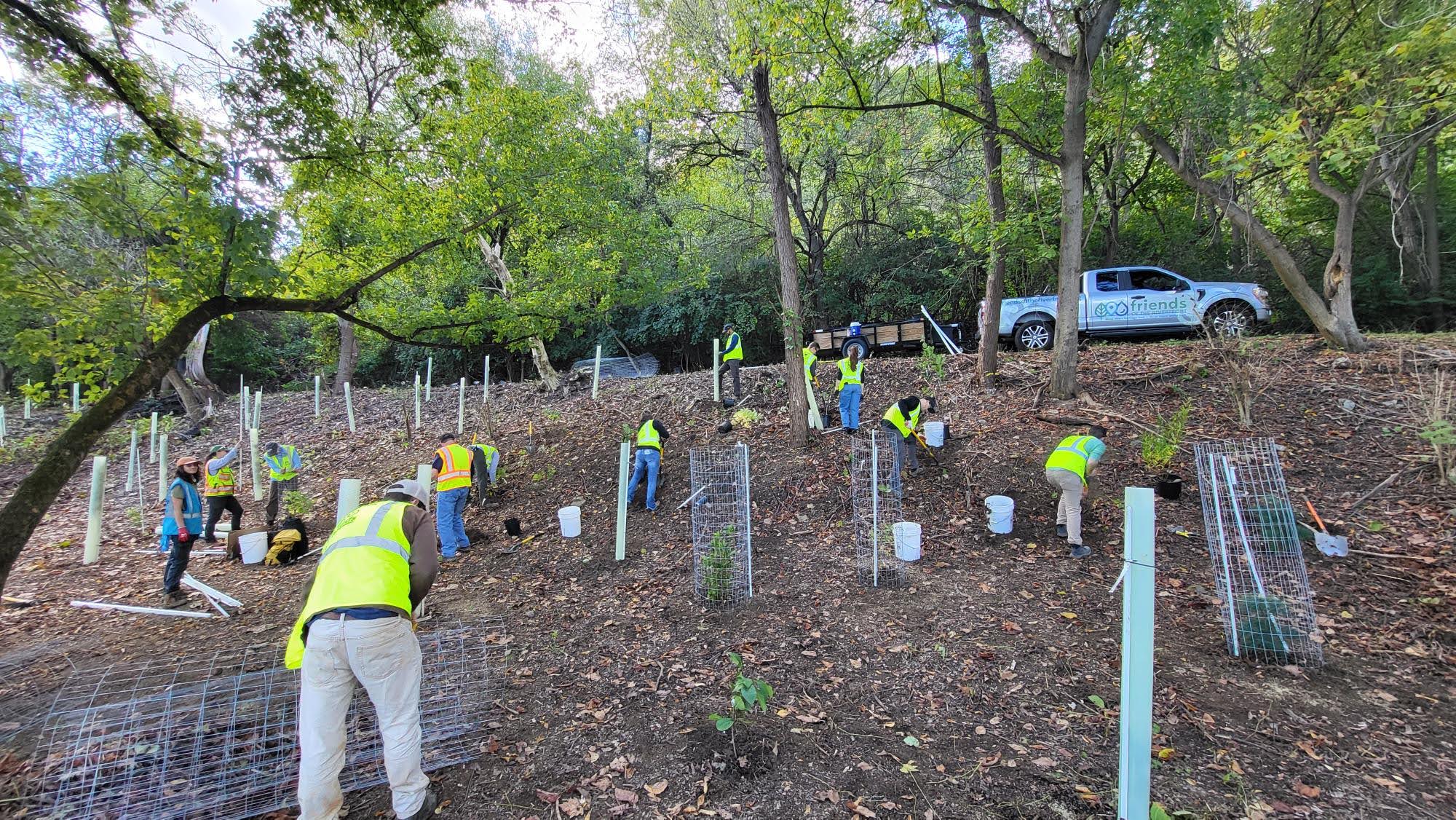
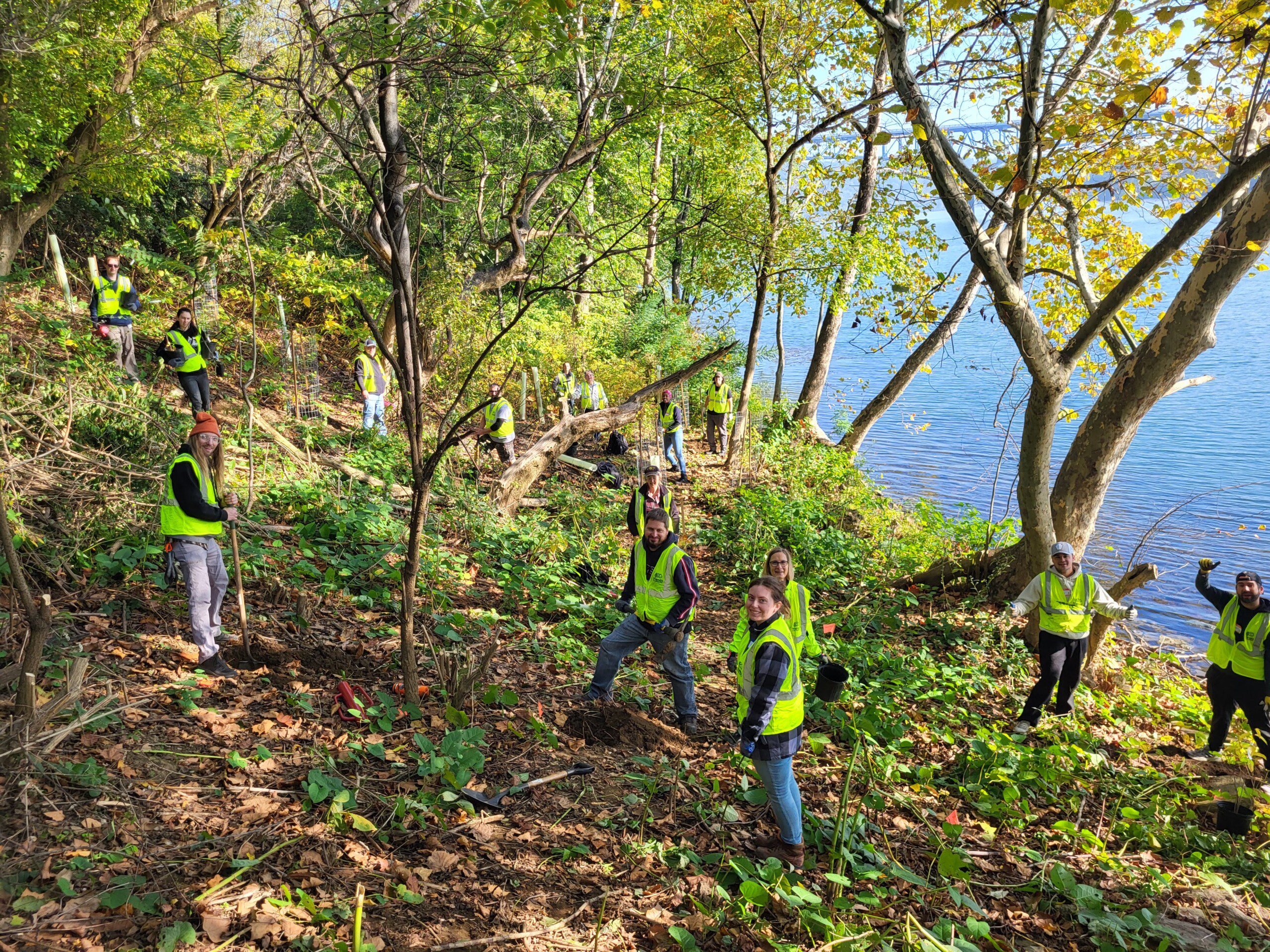
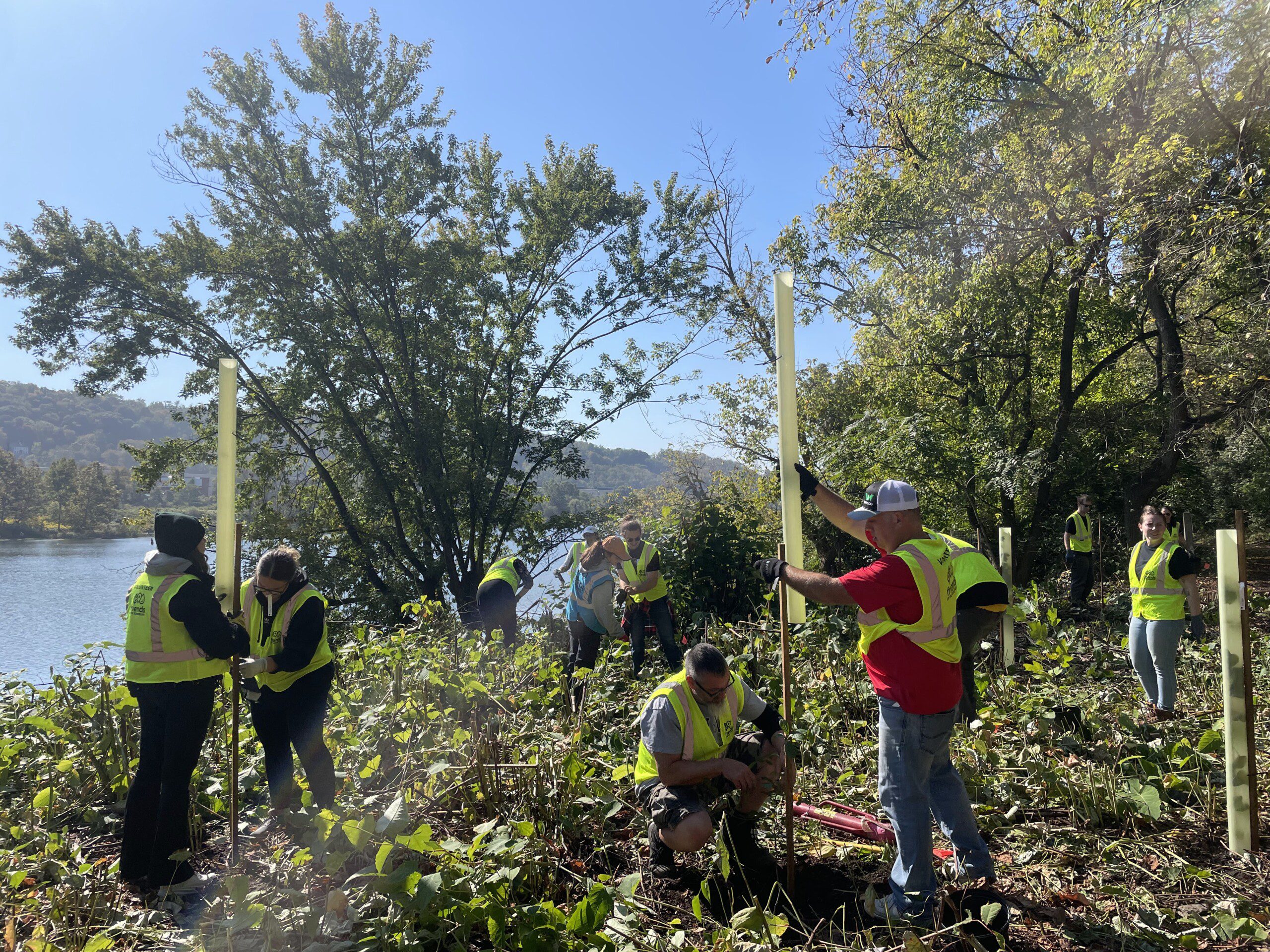
To date, Friends has engaged 245 volunteers who contributed 716 hours towards planting 300 trees, removing invasive vegetation, performing tree maintenance, and managing the site.
Timeline
March 2024: Site visits and project scouting
June 2024: Volunteers clear access points at site 1
July 2024: Allegheny GoatScape herd clears knotweed at site 1
August 2024: Application of year one herbicide treatment at site 1
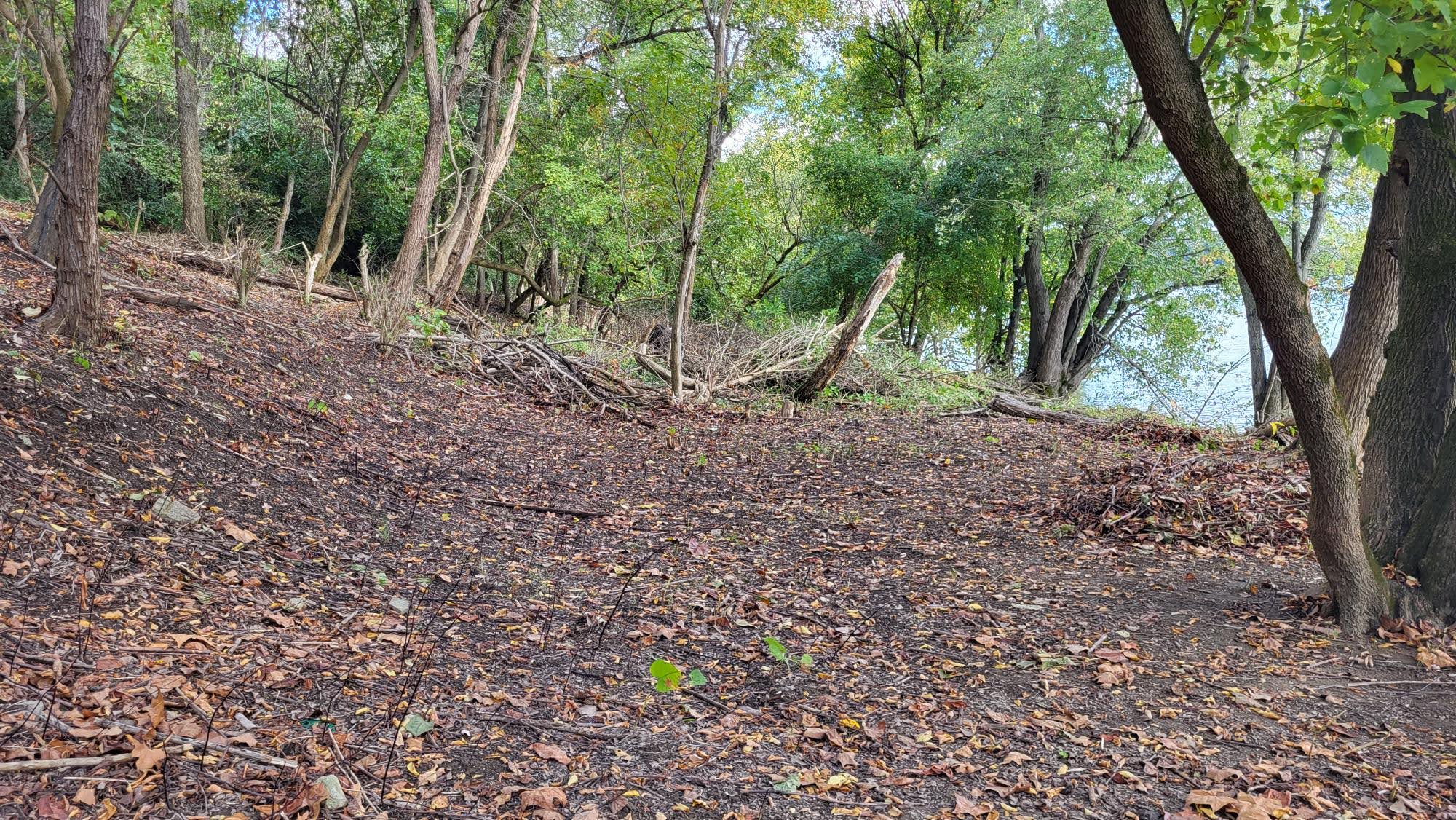
October 2024: Volunteers clear honeysuckle and knotweed stalks in preparation for tree planting at site 1
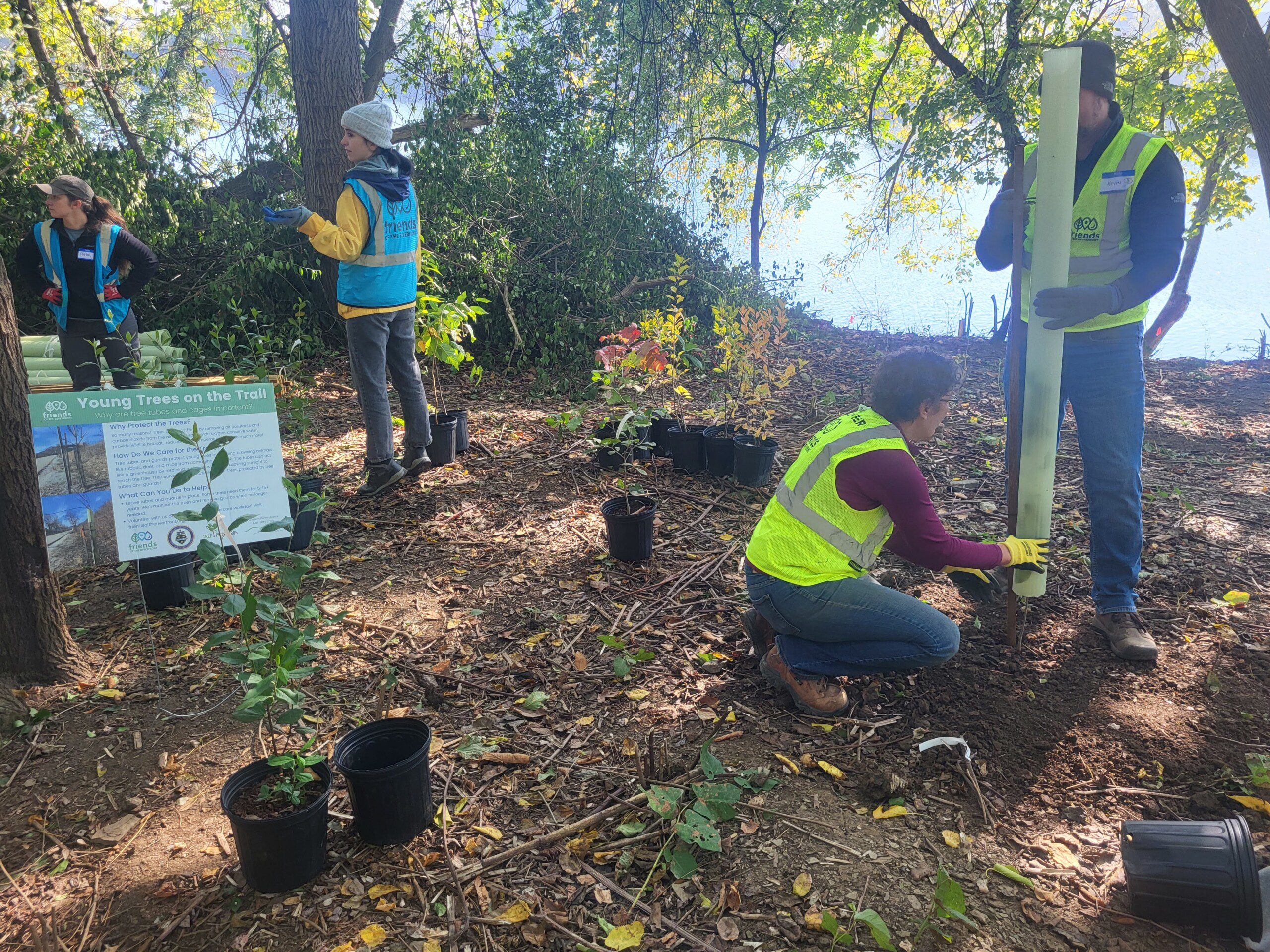
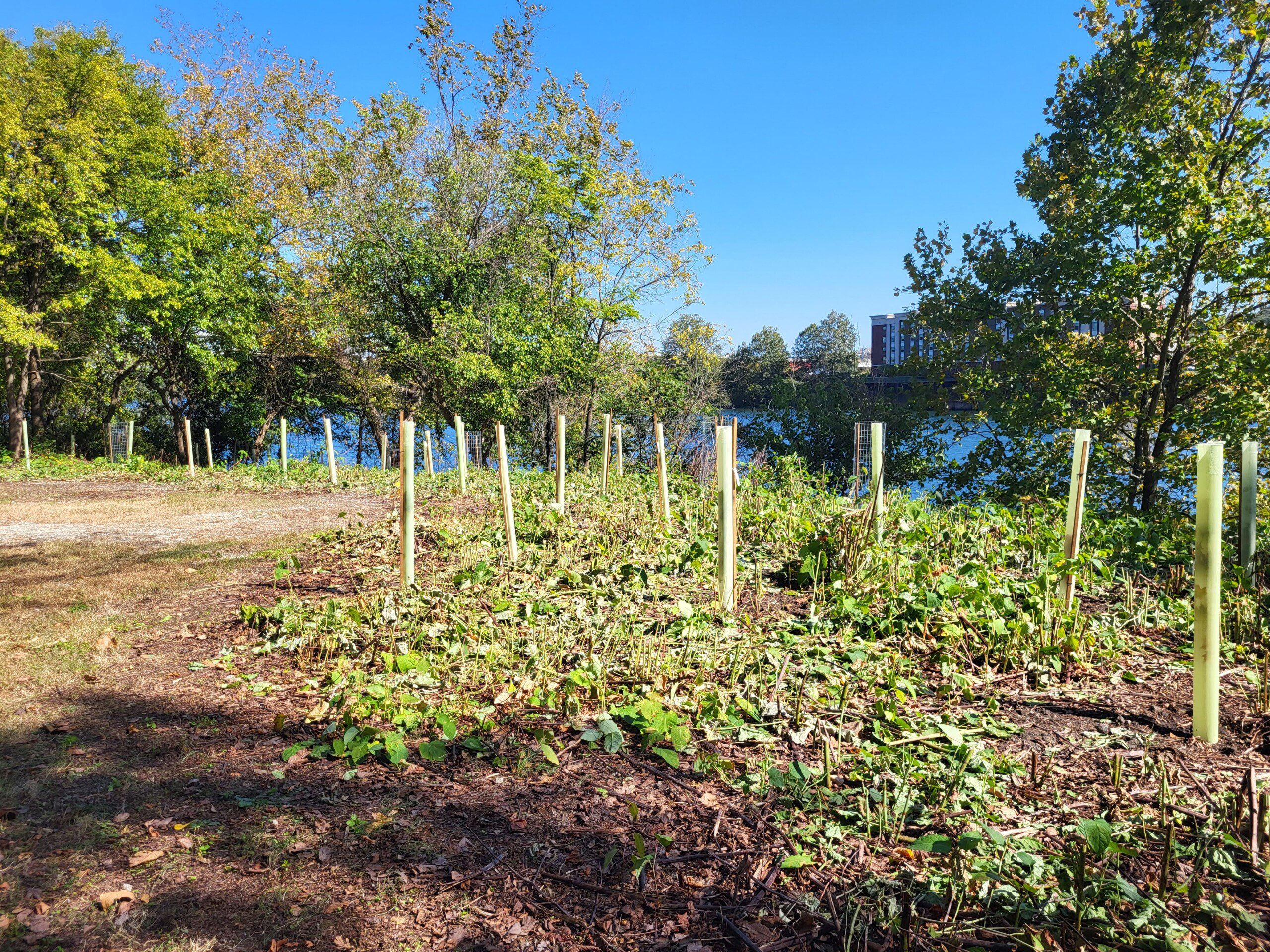
October 2024: U.S. Steel, Pittsburgh Penguins, and Wesco volunteers install approximately 100 trees across site 1
March 2025: Friends staff perform tree maintenance and tending
April 2025: Volunteer tree maintenance and invasive removal across sites 1 and 2
June 2025: Allegheny Goatscape herds clears knotweed at site 2
August 2025: Application of year two herbicide treatment at site 1 and year one treatment at site 2
October 2025: Landforce tree planting site preparation at site 2
October 2025: Installation of 150 trees at site 2 by public and employer volunteers (CEC, Inc.)
Funding
Primary funding comes from the United States Forest Service Urban and Community Forestry program through the Inflation Reduction Act.
Common Questions
Click here to read FAQs about herbicide use and suppression of knotweed at restoration sites
through our FAQ document. If you have additional questions, contact Alex Toner, Director of Trail Stewardship at alex@friendsoftheriverfront.org.