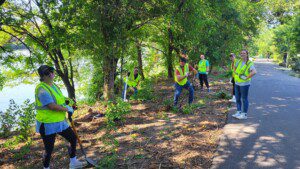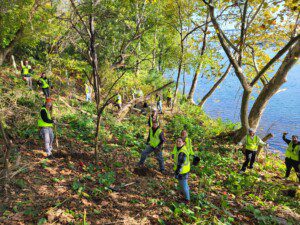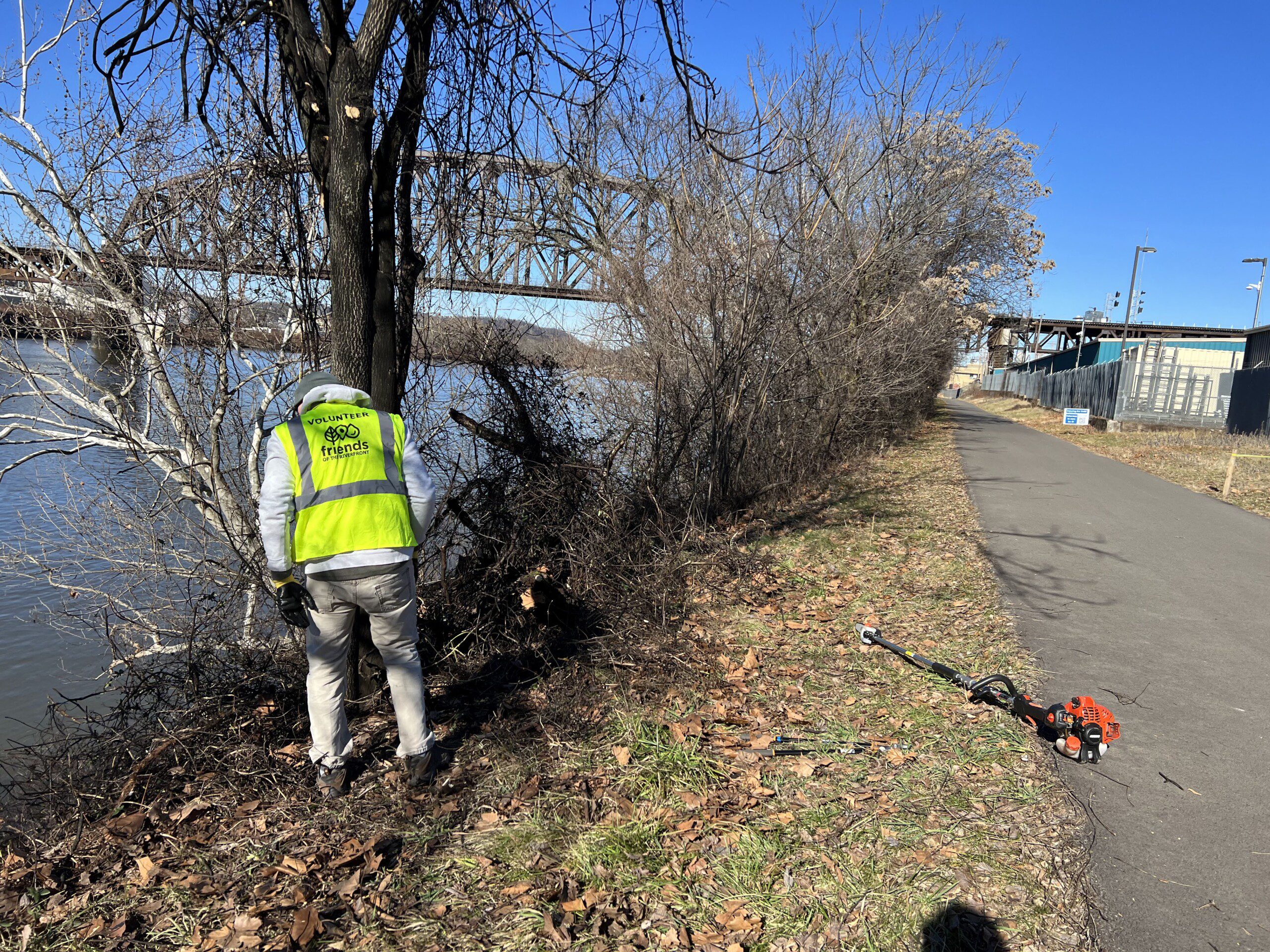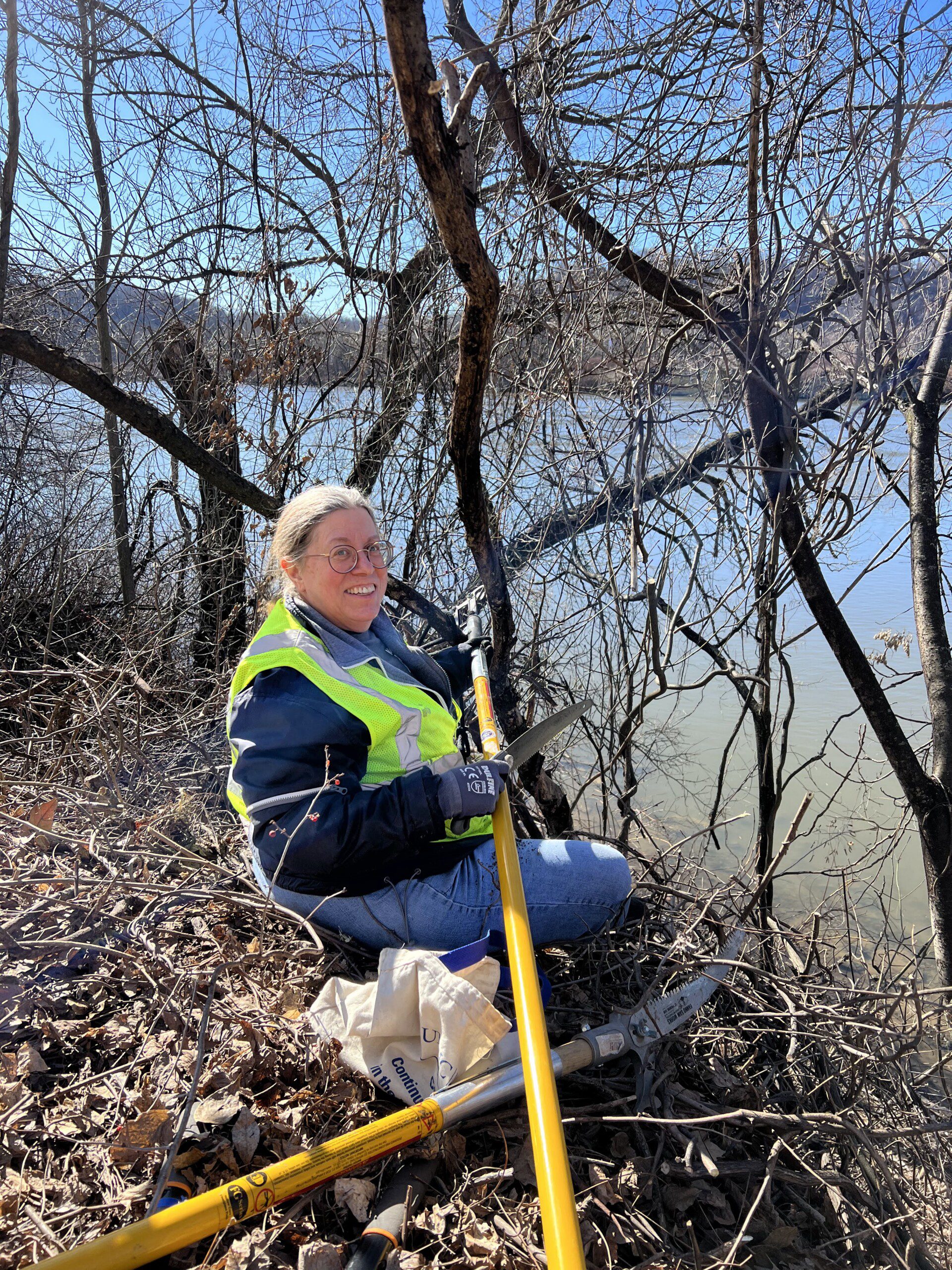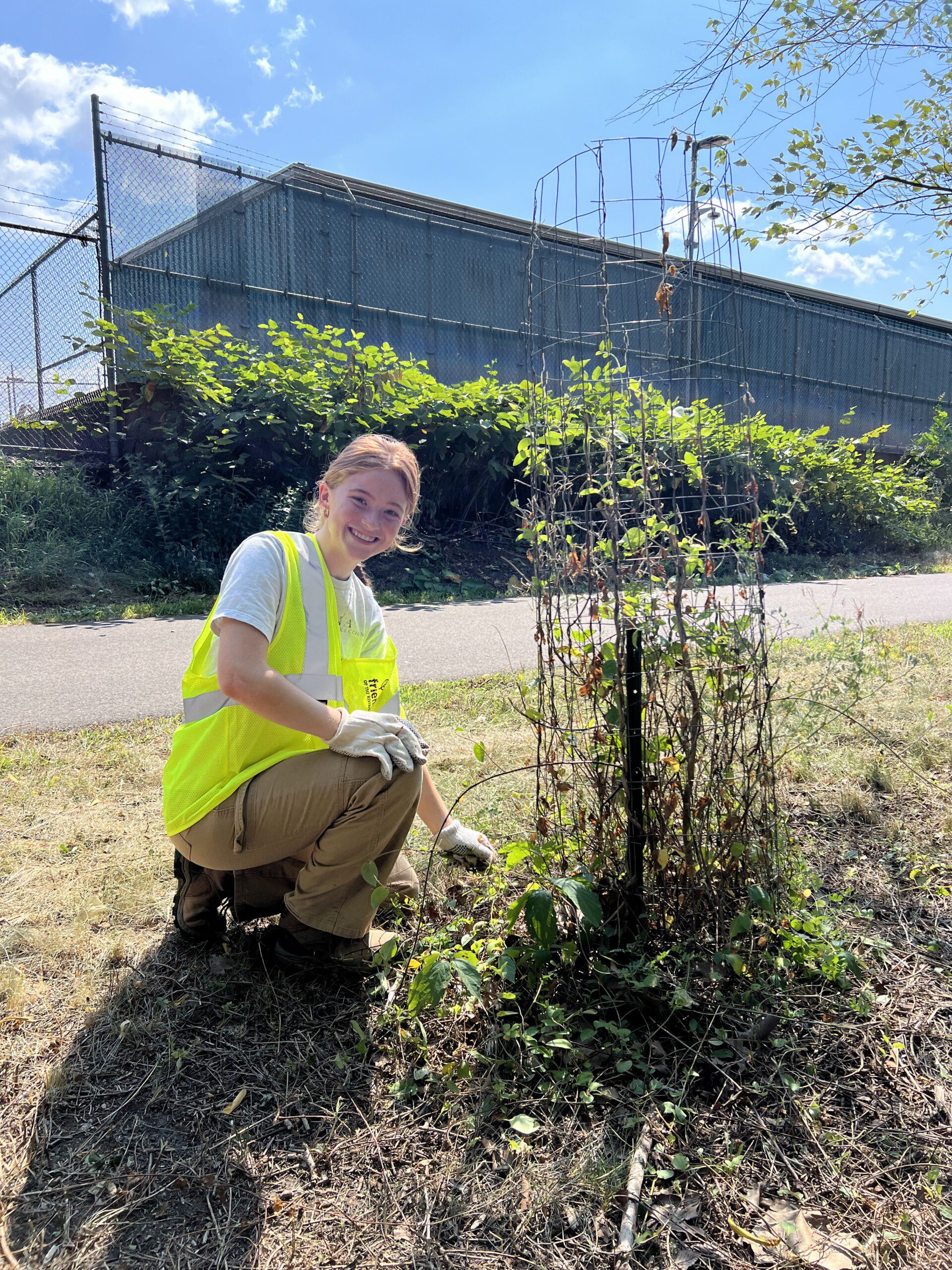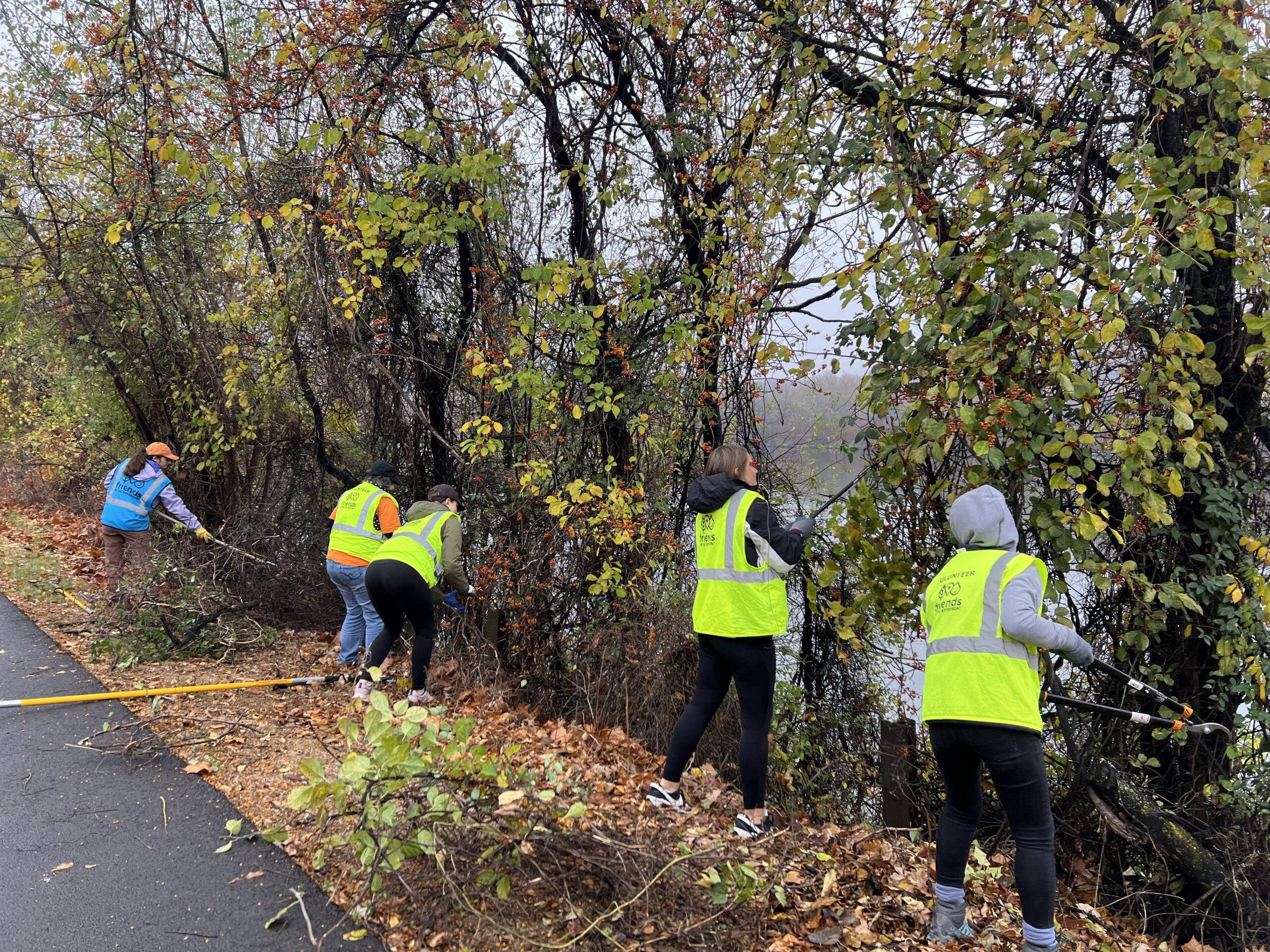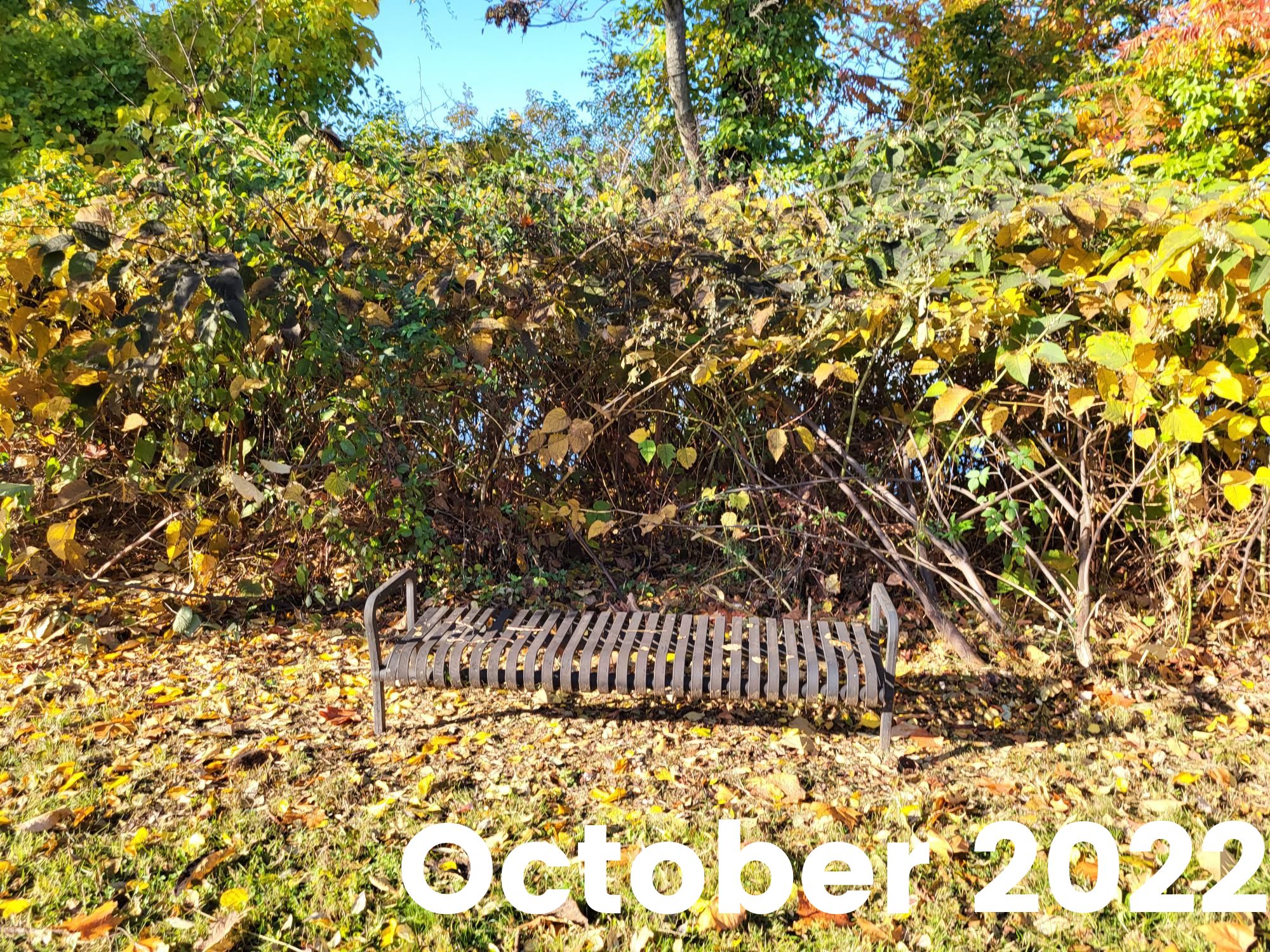

The existing Marshall-Shadeland segment of the Heritage Trail, between Westhall Street and Island Avenue along the Ohio river, is approximately 0.86 miles long with a mix of steeply and gradually sloping riverbanks that have largely been overtaken by non-native, invasive vegetation. Present across the segment are Japanese knotweed, bush honeysuckle, porcelain berry, crown vetch, and tree-of-heaven. Not only are these monocultures a nuisance to trail users due to overgrowth and diminished river viewsheds, unchecked knotweed infestations, in particular, result in decreased biodiversity in both plant and animal communities, degraded water quality, and damage to human infrastructure like trail surfaces and drainage head walls.
Friends is leading a coordinated approach to reclaim approximately 2.35-acres of riverbank to:
• Reduce non-native invasive monocultures
• Advance a native and balanced biodiversity of plants and wildlife
• Restore native understory and tree canopy advancing the City of Pittsburgh’s Urban Forest Master Plan
• Reduce damage to infrastructure and maintenance costs for the City of Pittsburgh
• Improve viewsheds of the Ohio River for trail users
• Promote environmental stewardship, engagement, and advocacy
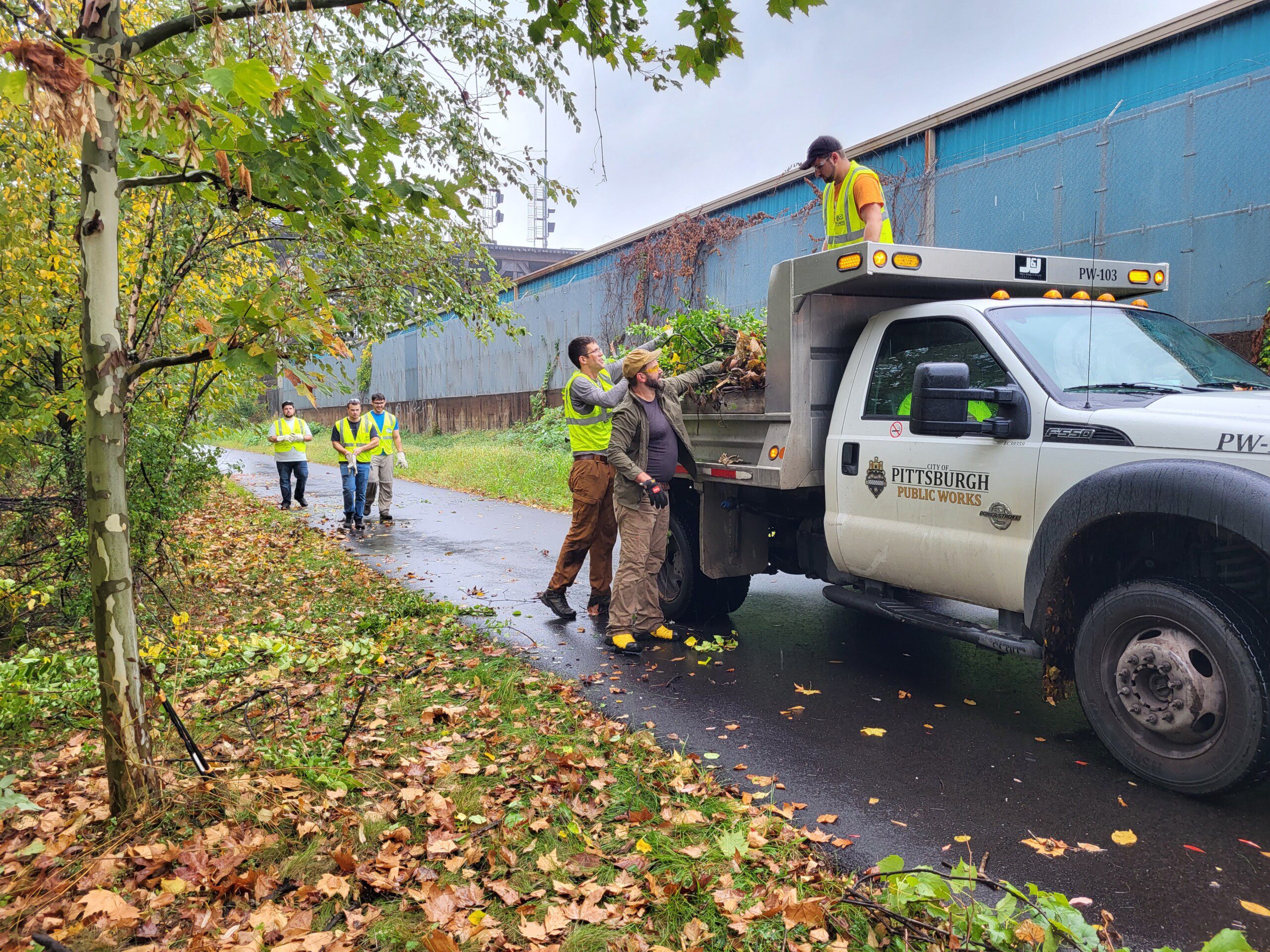
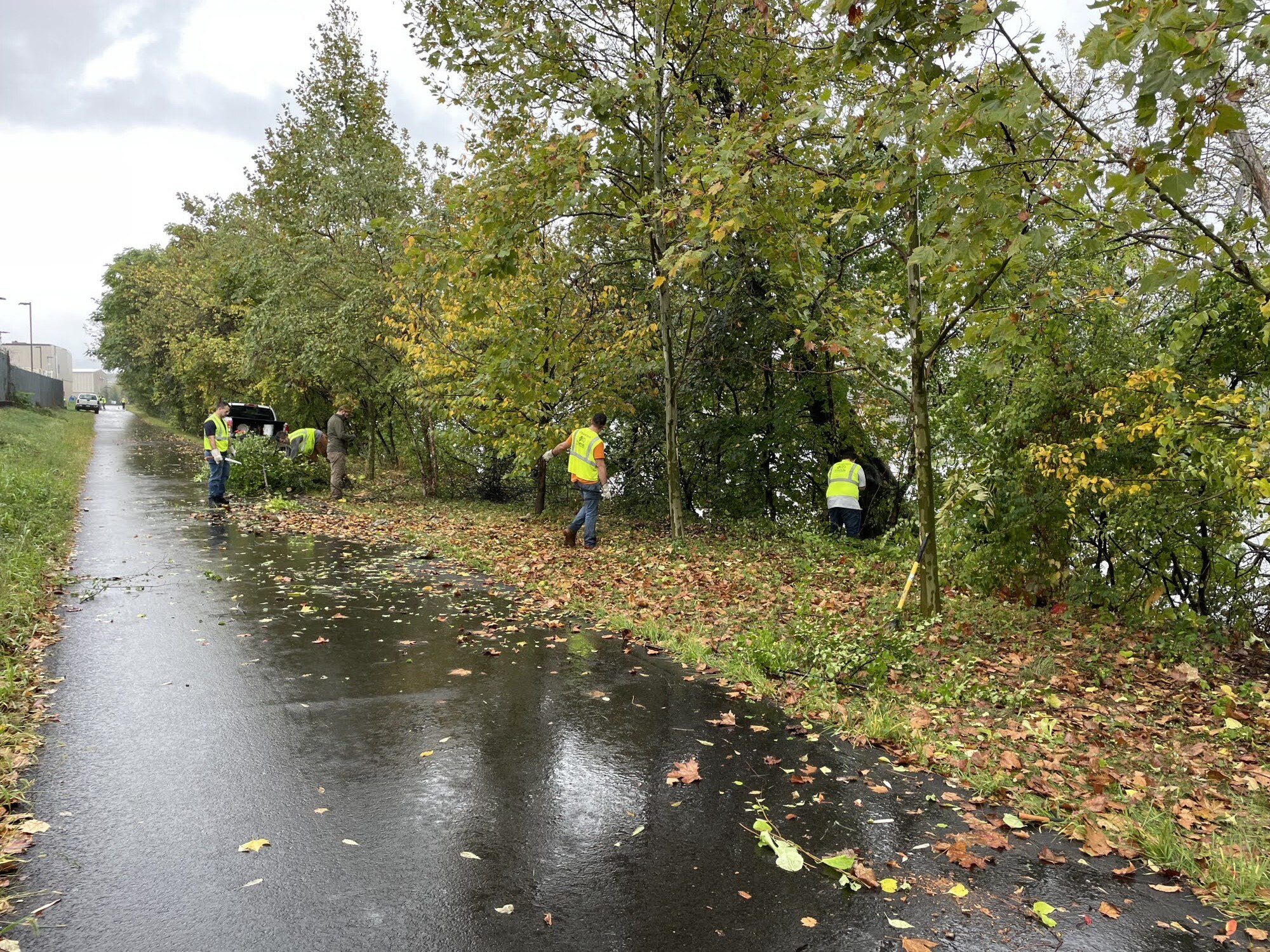
The 2.35-acre project (directly adjacent to the Preble Avenue Trailhead), broken into three project sites, includes non-native invasive vegetation suppression, tree pruning and undesirable vegetation removal, and restoration of tree canopy and native understory through plantings. Friends coordinates Landforce, a local non-profit partner, annually to mechanically clear and remove invasive vegetation to reduce it’s presence and allow for improved site access. Later each season Fruittown Land Stewardship Services, a permitted, state licensed applicator performs targeted herbicidal suppression of Japanese knotweed. Utilizing this process year over year, Friends anticipates remedial project completion in 2027, with over 200 native trees and shrubs planted and seeded.
Investment
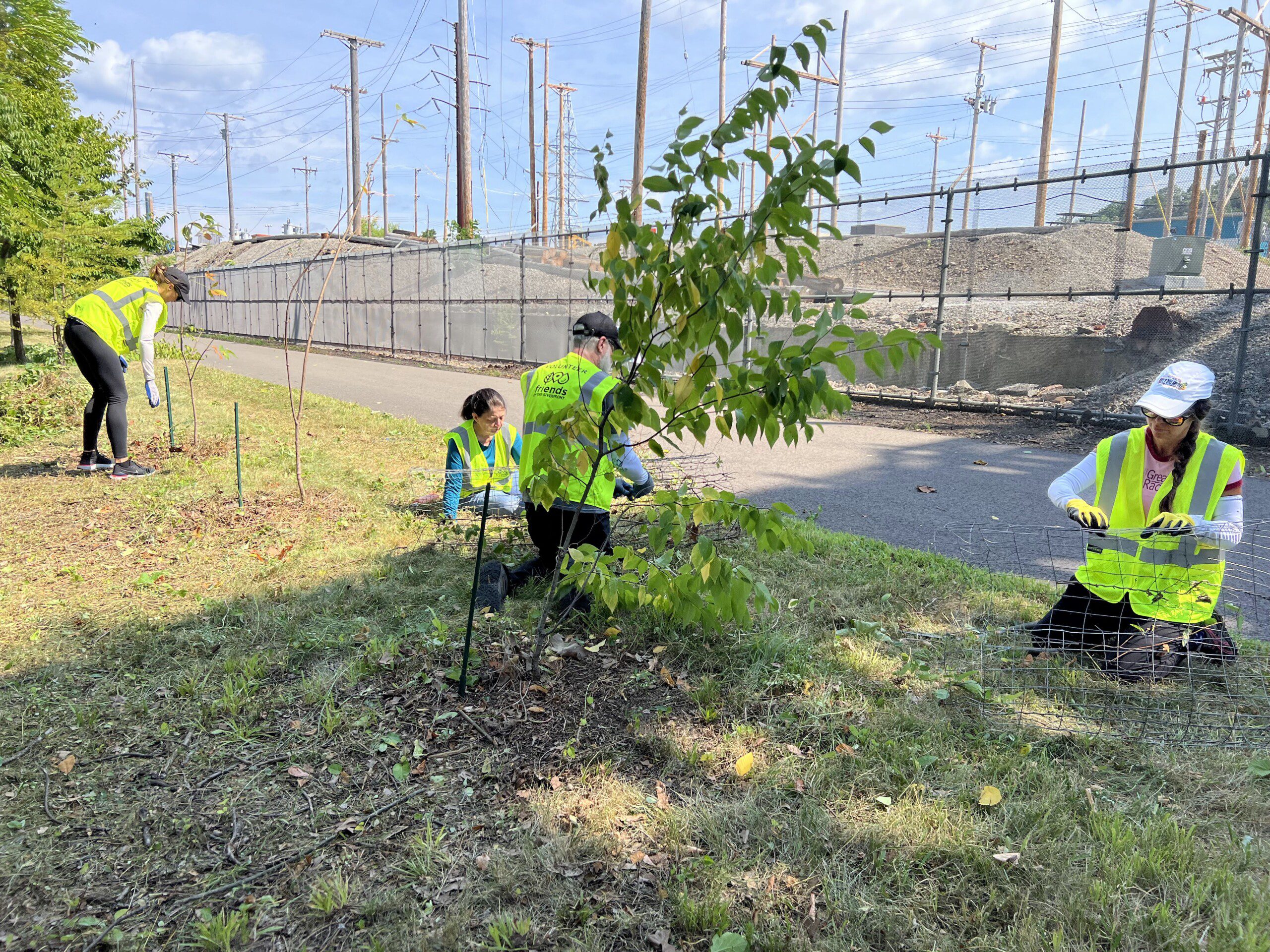
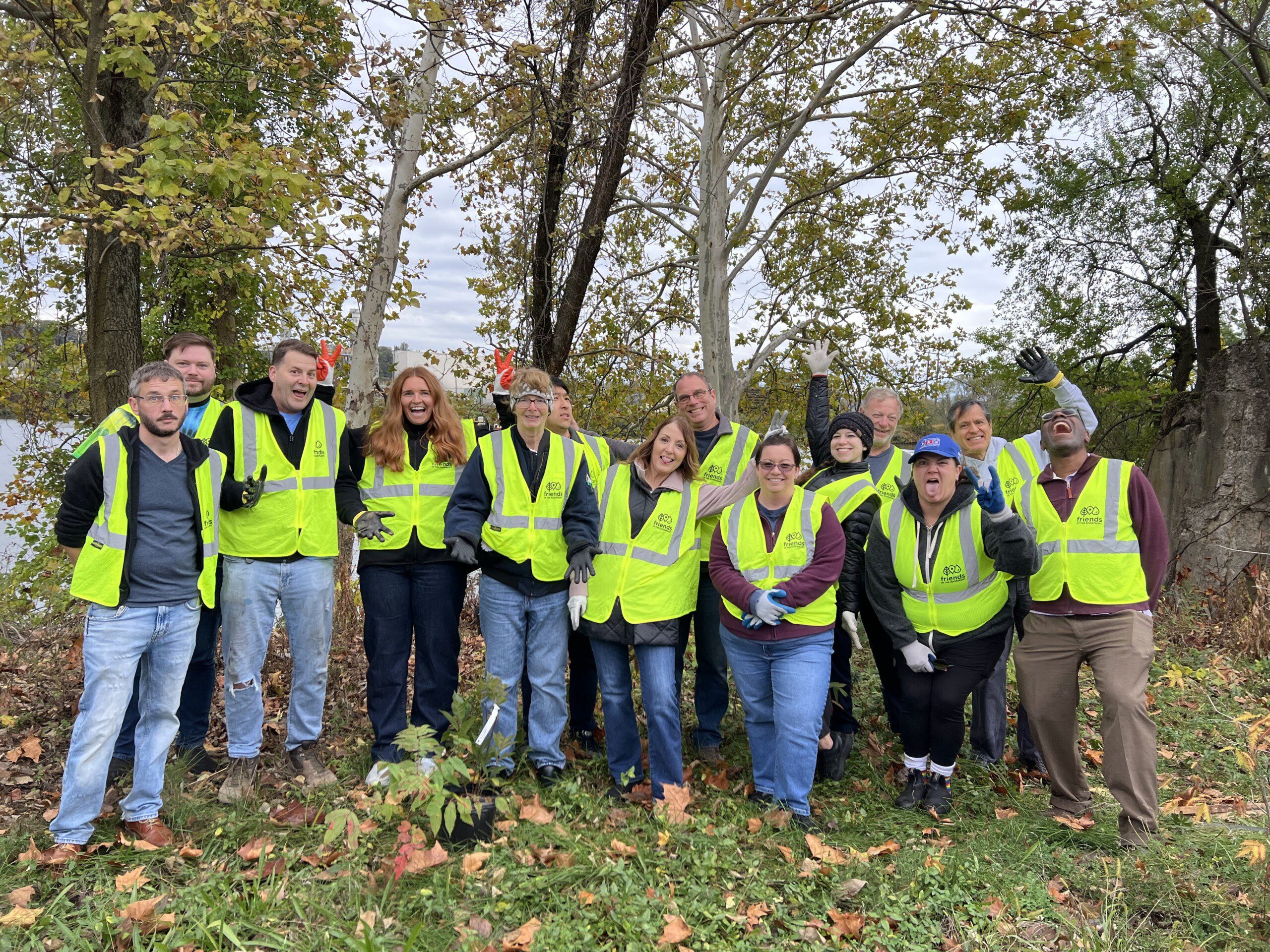
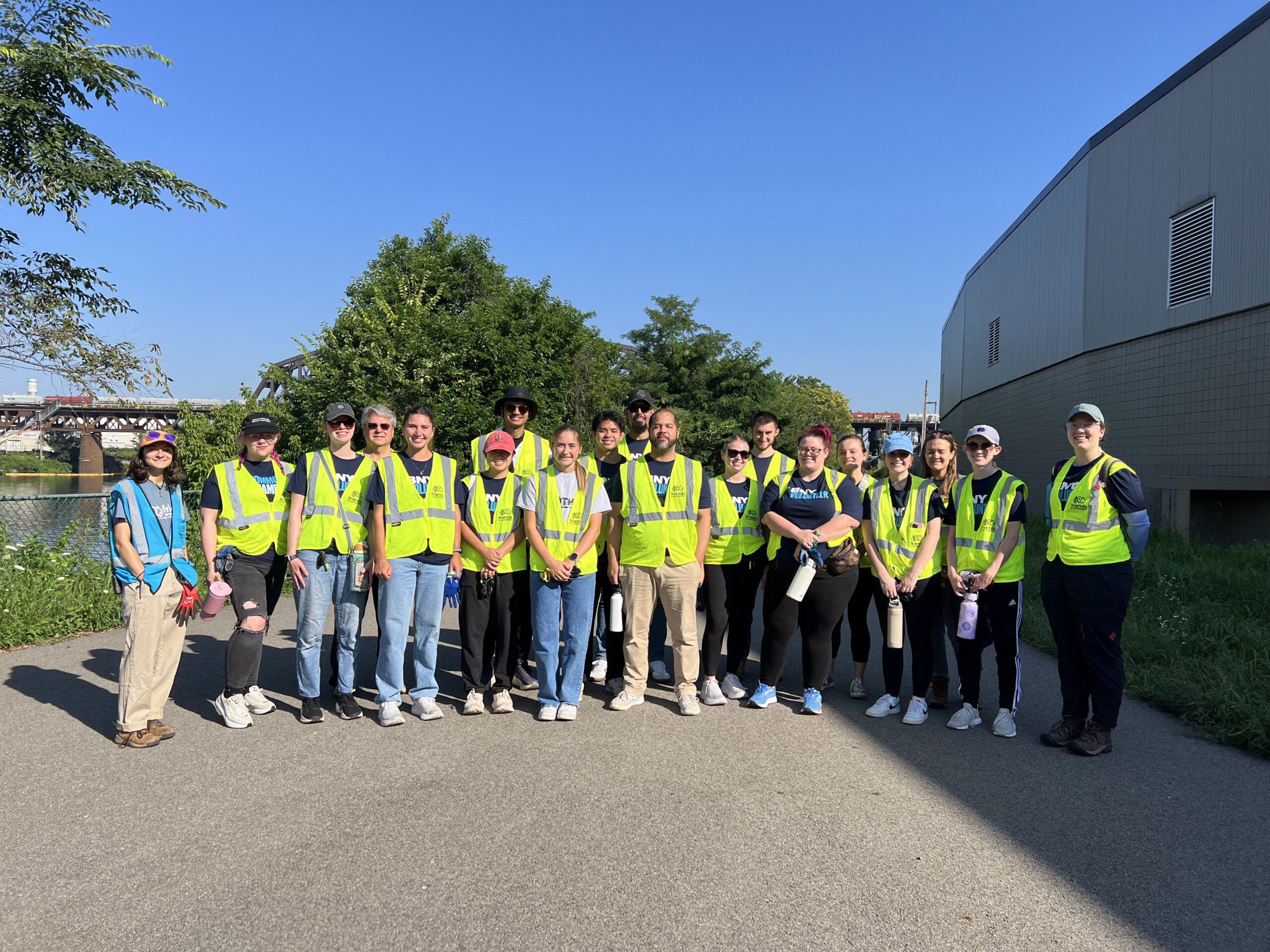
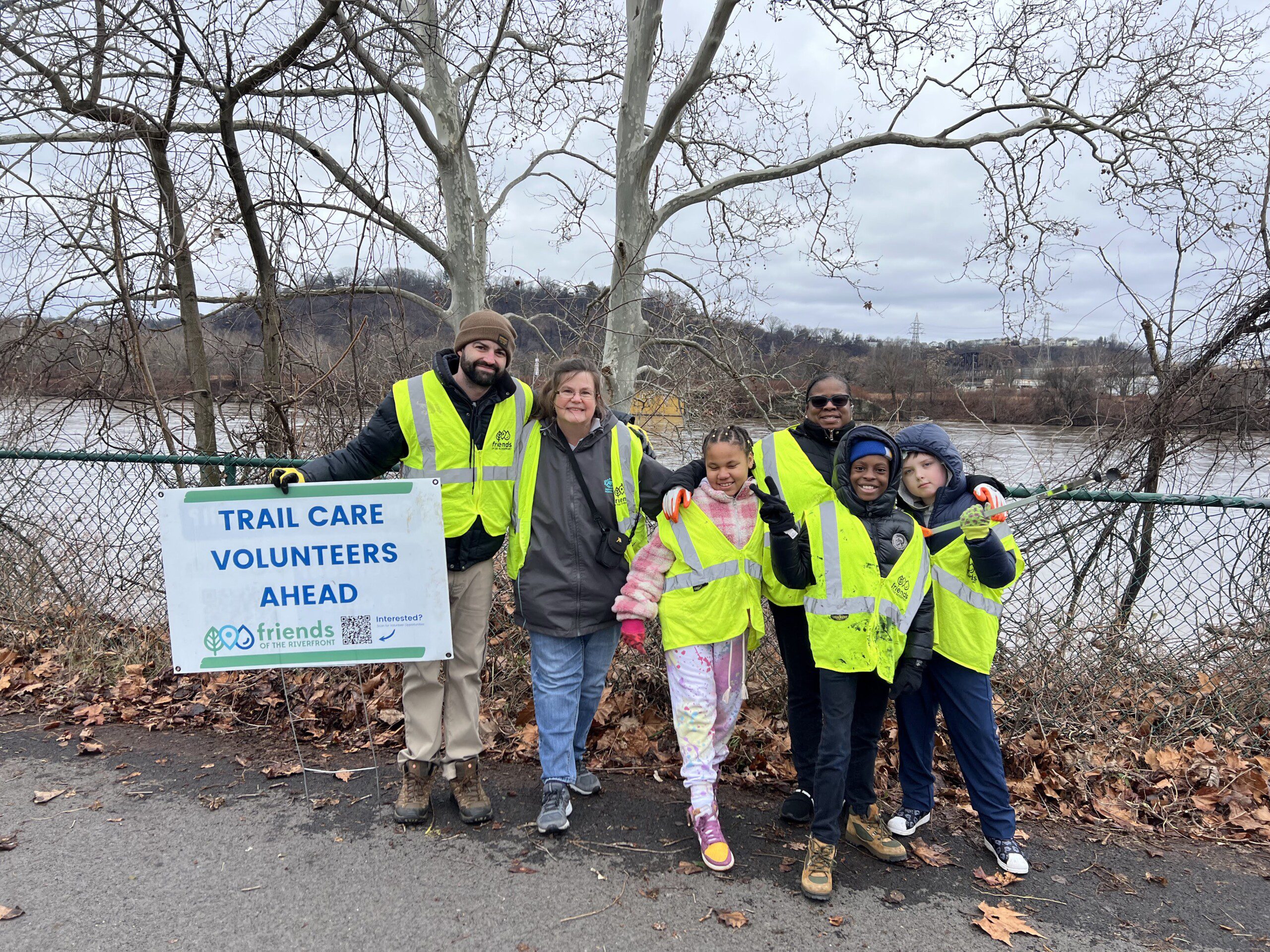
To date, Friends has engaged 204 volunteers who contributed 574 hours towards planting 108 native trees and shrubs, establishing a native pollinator garden, removing invasive vegetation, performing tree maintenance, and managing the site.
Timeline
January 2023: Site visits and project scouting
February 2023: Volunteers clear and remove invasive and undesired vegetation and dead limbs in zones 1-3
May 2023: Volunteers removed 16 tons of invasive and undesired vegetation in zone 2
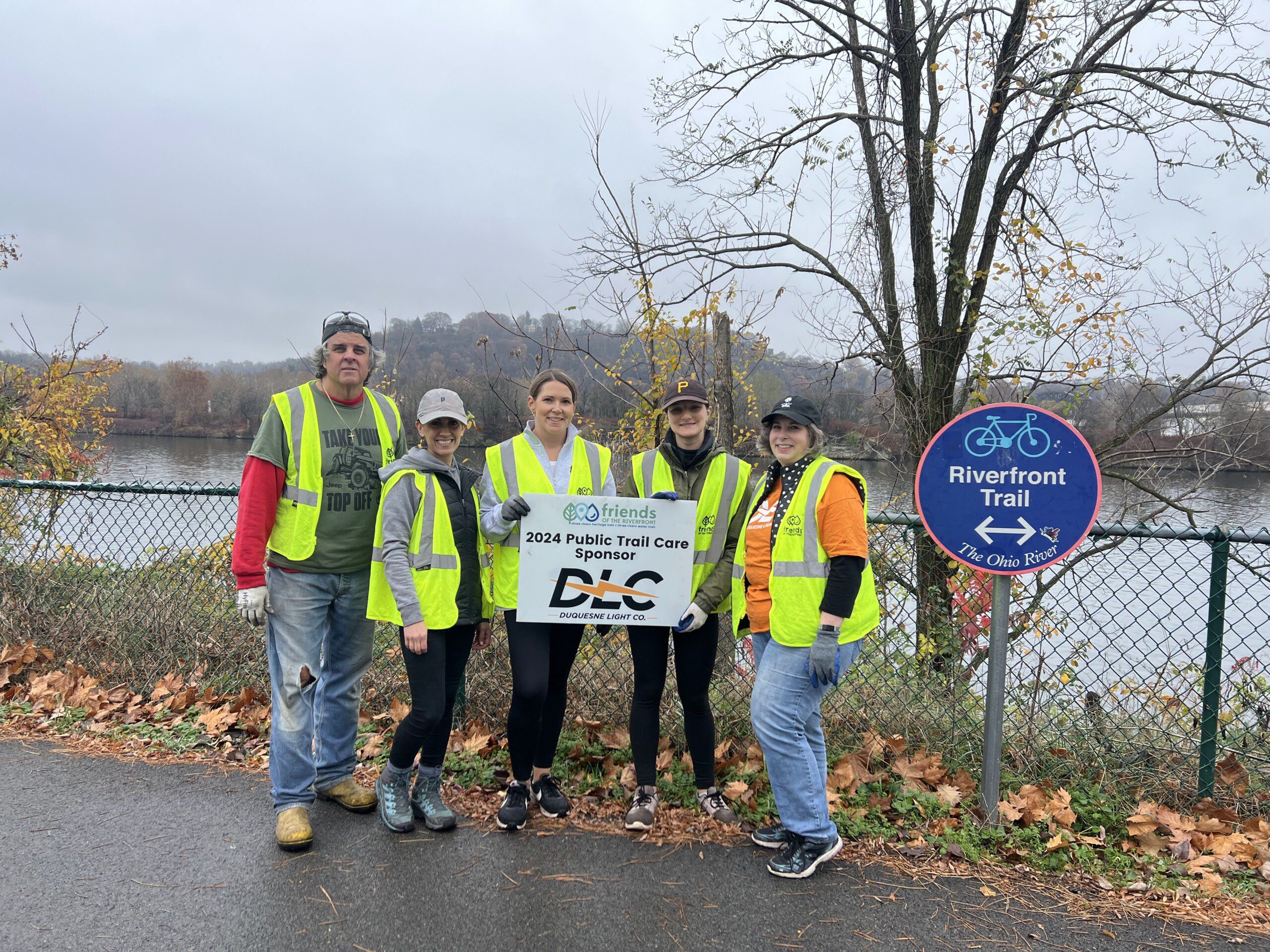
October 2023: Duquesne Light Company volunteers clear overgrowth and establish the Preble Avenue Trailhead pollinator garden in zone 1
January 2024: Volunteers continue to clear invasive and undesired vegetation in zone 2
February 2024: Volunteers tend to previously planted trees in zone 2
July 2024: Volunteers clear knotweed in preparation of year one herbicide application in zones 2 and 3
August 2024: Landforce crews cut and remove invasive and undesired vegetation on steep slopes in zones 1-3
August 2024: Fruittown applies year one herbicide treatment in zones 2-3
October 2024: Duquesne Light Company volunteers plant 40 native trees and shrubs along zone 2 and seed pollinator garden in zone 1
November 2024: Duquesne Light Company tends to newly planted trees
April 2025: Volunteers and staff tend to young trees
June 2025: Staff clear knotweed in preparation of year two herbicide application in zones 2-3
August 2025: Staff tend to young trees
August 2025: Fruittown applies year two herbicide treatment in zones 2-3
September 2025: Duquesne Light Company volunteers tend to young trees in zone 2 and plant 38 native shrubs in zone 1
October 2025: Staff tend to young trees and newly planted shrubs
October 2025: Sherwin Williams volunteers plant 30 native trees and shrubs in zone 2
Funding
Primary funding comes from the United States Forest Service Urban and Community Forestry program through the Inflation Reduction Act.
Duquesne Light Company has contributed over 342 volunteers hours over five Trail Care events focused on this restoration site since 2023. Beginning in 2026, Duquesne Light Company will strengthen its commitment through a three-year sponsorship of the Marshall Shadeland Heritage Trail segment, which will support the continuation of this project.
Friends received 2026 funding through the Trust for Public Lands 10-minute walk initiative, in partnership with Bidwell Training Center’s Horticulture Technology Program, to expand the native pollinator garden at the Preble Avenue trailhead by 2,000 square feet to foster improved environmental connections and enjoyment for trail users at a community trailhead.
Common Questions
Click here to read FAQs about herbicide use and suppression of knotweed at restoration sites through our FAQ document. If you have additional questions, contact Alex Toner, Director of Trail Stewardship at alex@friendsoftheriverfront.org.
City of Pittsburgh Natural and Wooded Area Restoration Standards
DNCR Non-native Invasive Species Fact Sheets
Western Pennsylvania Conservancy Riparian Tree Plantings
Control Invasive Shrubs in Spring with Basal Bark Herbicide Applications
Invasive Species References
Penn State Extension Japanese Knotweed Management
Japanese Knotweed fact sheet
United States Forestry Service funding & Pittsburgh Canopy Alliance
Pittsburgh Canopy Alliance
“Pittsburgh Canopy Alliance Celebrates Transformational Investment in Allegheny County”
“Pittsburgh Canopy Alliance and city will use $9 million to revitalize region’s tree canopy”
City of Pittsburgh
City of Pittsburgh Dept. of Public Works Division 1
Duquesne Light Company
Fruittown Landcare Services
Landforce
Bidwell Training Center’s Horticulture Technology Program